
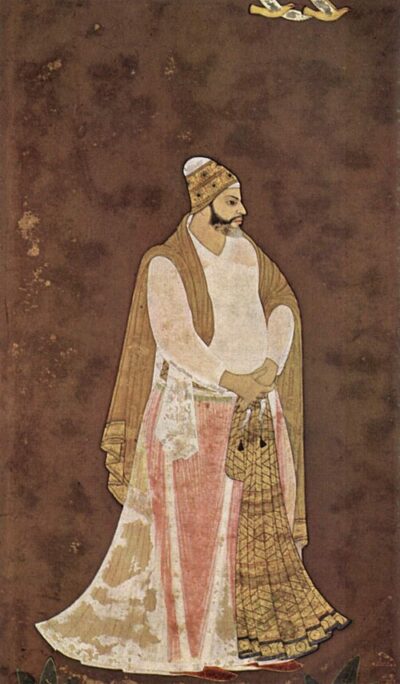
Muhammad Quli Qutb Shah
Muhammad Quli Qutb Shah was the 6th ruler of the kingdom of Golconda in southern India. Born 1565, in Golconda. Died January 11, 1612, in Hyderabad. Positions held include Sultan of Galconda (1580–1612).
Facts
18 facts · 2 confirmed by two sources · 0 cited · 16 from one source
Where this comes from
Papalocal keeps its own record. It started from these sources; what each one said is kept here as it was copied, so a change on their side never changes this page by itself. Tap one to read its version.
What Wikidata says · copied November 18, 2026 · revision 2557832757
- Described as
- 6th ruler of the kingdom of Golconda in southern India
- Born
- 1565
- Died
- January 11, 1612
- Born in
- Golconda
- Died in
- Hyderabad
- Citizen of
- Qutb Shahi dynasty
- Occupation
- monarch; military leader; patron of the arts; poet; writer
- Positions held
- Sultan of Galconda (1580–1612)
- Field
- politics; military administration; poetry; literature; arts
- Spouse
- Bhagmati (1589–) · 1 reference
- Father
- Ibrahim Quli Qutb Shah Wali
- Wikipedias with a page
- 22
Wikidata item Q2467539 (wikidata.org/wiki/Q2467539), public domain (CC0). Copied November 18, 2026.
What Wikipedia says · copied November 18, 2026 · revision 1373146972
Muhammad Quli Qutb Shah (4 April 1565 – 11 January 1612) was the fifth sultan of the Sultanate of Golconda and founder of the city of Hyderabad. He built its architectural centrepiece, the Charminar. He was an able administrator and his reign is considered one of the high points of the Qutb Shahi dynasty. He ascended to the throne in 1580 at the age of 15 and ruled for 31 years.
- Born, in its opening lines
- April 4, 1565
- Died, in its opening lines
- January 11, 1612
From the Wikipedia article “Muhammad Quli Qutb Shah” (en.wikipedia.org/wiki/Muhammad_Quli_Qutb_Shah), by its contributors, under CC BY-SA 4.0 (creativecommons.org/licenses/by-sa/4.0/). Copied November 18, 2026; not changed.
Confirmed Two sources agree. Cited One source, and it names where it got it. One source One source, without a reference of its own. Sources disagree The sources disagree. We show the best-supported value and keep theirs below.
