
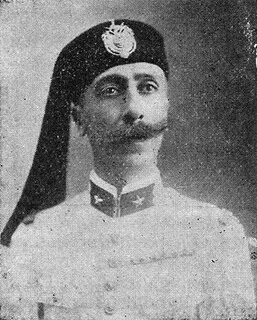
Muhammad VIII of Tunisia
Muhammad VIII of Tunisia was a Monarch of Tunis. Born September 4, 1881, in Carthage. Died September 30, 1962, in Tunis. Positions held include Bey of Tunis (1943–1957). Awards include Grand Cross of the Legion of Honour, Grand Cross of the Order of Wissam Alaouite and Grand Cross of the Order of Civil Merit.
Facts
20 facts · 2 confirmed by two sources · 5 cited · 13 from one source
Where this comes from
Papalocal keeps its own record. It started from these sources; what each one said is kept here as it was copied, so a change on their side never changes this page by itself. Tap one to read its version.
What Wikidata says · copied November 17, 2026 · revision 2546746145
- Described as
- Monarch of Tunis (1943-1957)
- Other names
- Muhammad 08 Al-Amin
- Born
- September 4, 1881 · 1 reference
- Died
- September 30, 1962 · 1 reference
- Born in
- Carthage · 1 reference
- Died in
- Tunis · 1 reference
- Citizen of
- French protectorate of Tunisia (–1956); Tunisia (1956–)
- Occupation
- politician
- Positions held
- Bey of Tunis (1943–1957)
- Awards
- Grand Cross of the Legion of Honour; Grand Cross of the Order of Wissam Alaouite; Grand Cross of the Order of Civil Merit; Order of Glory; Supreme Order of the Renaissance; Order of Muhammad Ali; Nichan ad-Dam
- Spouse
- Jeneïna Beya · 1 reference
- Children
- Lalla Zakia · 1 reference
- Father
- Muhammad VI al-Habib · 1 reference
- Religion
- Sunni Islam
- Military rank
- field marshal
- Wikipedias with a page
- 25
Wikidata item Q943661 (wikidata.org/wiki/Q943661), public domain (CC0). Copied November 17, 2026.
What Wikipedia says · copied November 17, 2026 · revision 1374765521
Muhammad el-Amine Bey bin Muhammad el-Habib (Arabic: محمد الأمين باي بن محمد الحبيب, romanized: Muḥammad al-Amīn Bāy bin Muḥammad al-Ḥabīb; 4 September 1881 – 30 September 1962), commonly known as Lamine Bey, was the last Bey of Tunis (15 May 1943 – 20 March 1956), and also the only King of Tunisia after independence.
Lamine Bey was enthroned in unusual circumstances following the removal of his predecessor Moncef Bey by the French Resident General Henri Giraud in 1943. It was not until Moncef Bey's death in 1948 that Lamine Bey's legitimacy was recognized by the people of Tunisia. He took steps to align himself with the Tunisian national movement against the French protectorate but was sidelined by the Neo Destour after he accepted French-initiated reforms in 1954. Shortly after independence, Lamine Bey was turned out of his palace along with his family. Their property was seized and several family members were imprisoned. He ended his days living in a small apartment in Tunis.
- Born, in its opening lines
- September 4, 1881
- Died, in its opening lines
- September 30, 1962
From the Wikipedia article “Lamine Bey” (en.wikipedia.org/wiki/Lamine_Bey), by its contributors, under CC BY-SA 4.0 (creativecommons.org/licenses/by-sa/4.0/). Copied November 17, 2026; not changed.
Confirmed Two sources agree. Cited One source, and it names where it got it. One source One source, without a reference of its own. Sources disagree The sources disagree. We show the best-supported value and keep theirs below.
