
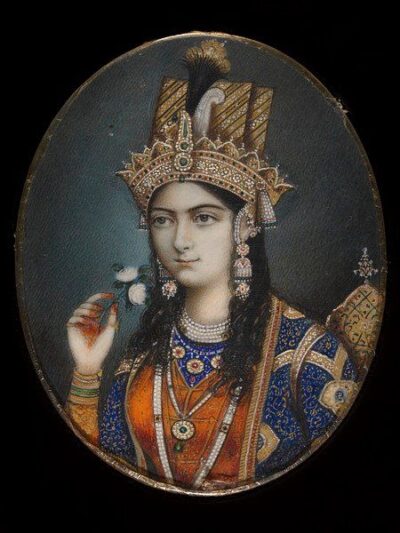
Mumtaz Mahal
Mumtaz Mahal was a Mughal empress. Born April 27, 1593, in Agra. Died June 17, 1631, in Burhanpur. Positions held include empress consort (1628–1631).
Facts
20 facts · 2 confirmed by two sources · 1 cited · 16 from one source · 1 where the sources disagree
What’s different
- Cause of death: we show puerperal disorders (Sources disagree). Wikidata also lists puerperal infection and complication of pregnancy, childbirth and the puerperium
Where this comes from
Papalocal keeps its own record. It started from these sources; what each one said is kept here as it was copied, so a change on their side never changes this page by itself. Tap one to read its version.
What Wikidata says · copied November 16, 2026 · revision 2565568186
- Described as
- Mughal empress
- Other names
- Arjumand Banu, Mumtaz, Empress, consort of Shahjahan, Emperor of India Mahal, Empress, consort of Shahjahan, Emperor of India Mumtaz Mahal, Empress, consort of Shahjahan Mumtaz Mahal, Empress, consort of Shahjahan, Emperor of India Mumtaz Mahall, Empress, consort of Shahjahan, Emperor of India Mumatāza Mahala, Begum Mumtaz-Mahal Mogulreich, Empress, consort of Shahjahan, Emperor of India Arjumand Banu, Arjumand, Empress, consort of Shahjahan, Emperor of India Banu, Mumtaz, Empress, consort of Shahjahan, Emperor of India Mahall, Mumtāz Maḥal
- Born
- April 27, 1593
- Died
- June 17, 1631 · 1 reference
- Born in
- Agra
- Died in
- Burhanpur
- Buried in
- Taj Mahal
- Cause of death
- puerperal disorders; puerperal infection; complication of pregnancy, childbirth and the puerperium
- Occupation
- empress consort; poet
- Positions held
- empress consort (1628–1631)
- Spouse
- Shah Jahan (1612–1631) · 1 reference
- Children
- Aurangzeb; Dara Shikoh; Murad Bakhsh · 1 reference; Shah Shuja; Jahanara Begum; Roshanara Begum; Gauhar Ara Begum
- Father
- Abul-Hasan ibn Mirza Ghiyas Beg · 1 reference
- Siblings
- Shaista Khan
- Religion
- Shia Islam
- Wikipedias with a page
- 69
Wikidata item Q231693 (wikidata.org/wiki/Q231693), public domain (CC0). Copied November 16, 2026.
What Wikipedia says · copied November 16, 2026 · revision 1379193148
Mumtaz Mahal (Persian pronunciation: [mum.ˈtɑːz ma.ˈhal]; lit. 'The Exalted One of the Palace'; born Arjumand Banu Begum; 27 April 1593 – 17 June 1631) was the empress of the Mughal Empire from 1628 to 1631 as the chief consort of the fifth Mughal emperor, Shah Jahan. The Taj Mahal in Agra, often cited as one of the Wonders of the World, was commissioned by her husband to act as her tomb.
Mumtaz Mahal was born as Arjumand Banu Begum in Agra to a family of Persian nobility. She was the daughter of Abu'l-Hasan Asaf Khan, a wealthy noble who held high office in the Mughal Empire, and the niece of Nur Jahan, the chief consort of Emperor Jahangir and the power behind the emperor. Arjumand Banu was married at the age of 19 on 10 May 1612 or 16 June 1612 to Prince Khurram, later known by his regnal name Shah Jahan, who conferred upon her the title "Mumtaz Mahal" (lit. 'The Exalted One of the Palace'). Although betrothed to Shah Jahan since 1607, she ultimately became his second wife in 1612. Mumtaz and her husband had 14 children, including Jahanara Begum (Shah Jahan's favorite daughter) and Dara Shikoh (Shah Jahan's chosen heir apparent, who was defeated in the war of succession by his parents' third son, Aurangzeb, who ultimately became the sixth Mughal emperor in 1658).
Mumtaz Mahal died in 1631 in Burhanpur, Deccan (present-day Madhya Pradesh) during the birth of her 14th child, a daughter named Gauhar Ara Begum. Shah Jahan had the Taj Mahal built as a tomb for her, which is considered to be a monument of undying love. As with other Mughal imperial ladies, no contemporary likenesses of her are accepted, but imagined portraits were created from the 19th century onwards.
- Born, in its opening lines
- April 27, 1593
- Died, in its opening lines
- June 17, 1631
From the Wikipedia article “Mumtaz Mahal” (en.wikipedia.org/wiki/Mumtaz_Mahal), by its contributors, under CC BY-SA 4.0 (creativecommons.org/licenses/by-sa/4.0/). Copied November 16, 2026; not changed.
Confirmed Two sources agree. Cited One source, and it names where it got it. One source One source, without a reference of its own. Sources disagree The sources disagree. We show the best-supported value and keep theirs below.
