
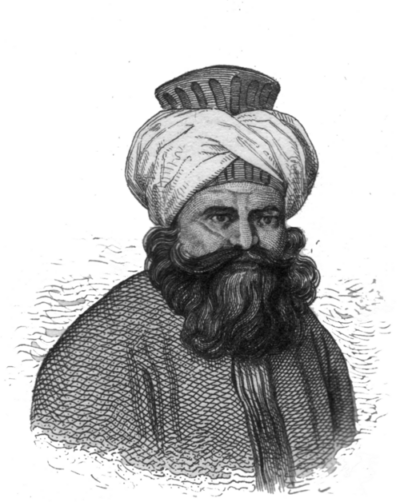
Murad Bey was an Egyptian noble. Born 1750, in Tbilisi. Died April 22, 1801, in Beni Suef. Positions held include Beylerbey of Egypt (1784–1785).
Facts
10 facts · 2 confirmed by two sources · 2 cited · 6 from one source
Where this comes from
Papalocal keeps its own record. It started from these sources; what each one said is kept here as it was copied, so a change on their side never changes this page by itself. Tap one to read its version.
What Wikidata says · copied November 17, 2026 · revision 2557348291
- Described as
- Egyptian noble (1750–1801)
- Other names
- Murad Bey Mohammed
- Born
- 1750 · 1 reference
- Died
- April 22, 1801 · 1 reference
- Born in
- Tbilisi
- Died in
- Beni Suef
- Cause of death
- bubonic plague
- Citizen of
- Ottoman Empire
- Occupation
- military personnel · 1 reference; official · 1 reference
- Positions held
- Beylerbey of Egypt (1784–1785)
- Spouse
- Nafisa al-Bayda
- Wikipedias with a page
- 24
Wikidata item Q715652 (wikidata.org/wiki/Q715652), public domain (CC0). Copied November 17, 2026.
What Wikipedia says · copied November 17, 2026 · revision 1381559653
Murad Bey (c. 1750 – 22 April 1801) was an Egyptian Mamluk chieftain (Bey), cavalry commander and joint ruler of Egypt with Ibrahim Bey. He is often remembered as being a cruel and extortionate ruler, but an energetic courageous fighter.
The title given to him, "Bey", denotes an elite administrative/military status of command, subject to the cultural norms of the Ottoman Empire. More specifically, the cultural norms of the Egyptian province in the Ottoman Empire, since Egypt enjoyed varying degrees of autonomy throughout the Ottoman period.
- Born, in its opening lines
- c. 1750
- Died, in its opening lines
- April 22, 1801
From the Wikipedia article “Murad Bey” (en.wikipedia.org/wiki/Murad_Bey), by its contributors, under CC BY-SA 4.0 (creativecommons.org/licenses/by-sa/4.0/). Copied November 17, 2026; not changed.
Confirmed Two sources agree. Cited One source, and it names where it got it. One source One source, without a reference of its own. Sources disagree The sources disagree. We show the best-supported value and keep theirs below.
