
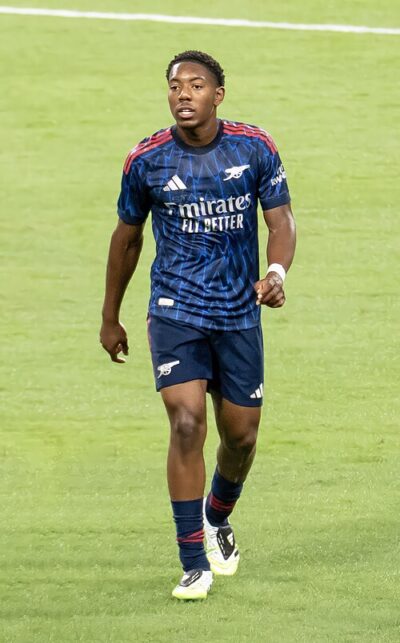
Myles Lewis-Skelly is an English footballer. Born September 26, 2006, in Islington. Teams include Arsenal F.C. and England men's national association football team.
Facts
9 facts · 1 confirmed by two sources · 1 cited · 7 from one source
Where this comes from
Papalocal keeps its own record. It started from these sources; what each one said is kept here as it was copied, so a change on their side never changes this page by itself. Tap one to read its version.
What Wikidata says · copied November 16, 2026 · revision 2561522408
- Described as
- English footballer (born 2006)
- Other names
- Myles Anthony Lewis-Skelly
- Born
- September 26, 2006
- Born in
- Islington · 1 reference
- Name at birth
- Myles Anthony Lewis-Skelly · 1 reference
- Citizen of
- United Kingdom
- Occupation
- association football player
- Teams
- Arsenal F.C.; England men's national association football team
- Sport
- association football
- Height
- 1.78 m (5 ft 10 in) · 1 reference
- Wikipedias with a page
- 32
Wikidata item Q118571844 (wikidata.org/wiki/Q118571844), public domain (CC0). Copied November 16, 2026.
What Wikipedia says · copied November 16, 2026 · revision 1385901793
Myles Anthony Lewis-Skelly (born 26 September 2006) is an English professional footballer who plays as a midfielder or left-back for Premier League club Arsenal and the England national team.
Lewis-Skelly has been with Arsenal since the age of eight, making his first-team debut with the club in September 2024, during the 2024–25 season.
Having representing England at multiple youth levels, Lewis-Skelly was selected for the senior squad in March 2025 for 2026 FIFA World Cup qualification, making his debut and scoring his first international goal against Albania.
- Born, in its opening lines
- September 26, 2006
From the Wikipedia article “Myles Lewis-Skelly” (en.wikipedia.org/wiki/Myles_Lewis-Skelly), by its contributors, under CC BY-SA 4.0 (creativecommons.org/licenses/by-sa/4.0/). Copied November 16, 2026; not changed.
Confirmed Two sources agree. Cited One source, and it names where it got it. One source One source, without a reference of its own. Sources disagree The sources disagree. We show the best-supported value and keep theirs below.
