
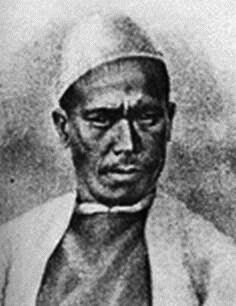
Nain Singh Rawat
Nain Singh Rawat was a Pundit who explored the Himalayas for the British. Born October 21, 1830, in Milam. Died February 1, 1882, in Moradabad. Awards include Patron’s Medal.
Facts
9 facts · 2 confirmed by two sources · 1 cited · 6 from one source
Where this comes from
Papalocal keeps its own record. It started from these sources; what each one said is kept here as it was copied, so a change on their side never changes this page by itself. Tap one to read its version.
What Wikidata says · copied November 18, 2026 · revision 2520132233
- Described as
- Pundit who explored the Himalayas for the British
- Other names
- Rai Bahadur Nain Singh Rawat, Nain Singh, Nunsee, Number 9, Pundit Number 9, No. 9, Pundit No. 9, 9, Nine, Pundit #9, #9, Pundit
- Born
- October 21, 1830
- Died
- February 1, 1882
- Born in
- Milam
- Died in
- Moradabad
- Cause of death
- myocardial infarction
- Citizen of
- British Raj
- Occupation
- explorer; pundit
- Awards
- Patron’s Medal (1877) · 1 reference
- Wikipedias with a page
- 20
Wikidata item Q1394526 (wikidata.org/wiki/Q1394526), public domain (CC0). Copied November 18, 2026.
What Wikipedia says · copied November 18, 2026 · revision 1343690718
Nain Singh Rawat (21 October 1830 – 1 February 1882), was one of the first Indian explorers (dubbed "pundits") employed by the British to explore the Himalayas and Central Asia. He came from the Johar Valley in Kumaon. He surveyed the trade route through Ladakh to Tibet, determined the location and altitude of Lhasa in Tibet, and surveyed a large section of Brahmaputra. His reports were initially made under the code name Number 9. He walked "1,580 miles, or 3,160,000 paces, each counted."
- Born, in its opening lines
- October 21, 1830
- Died, in its opening lines
- February 1, 1882
From the Wikipedia article “Nain Singh” (en.wikipedia.org/wiki/Nain_Singh), by its contributors, under CC BY-SA 4.0 (creativecommons.org/licenses/by-sa/4.0/). Copied November 18, 2026; not changed.
Confirmed Two sources agree. Cited One source, and it names where it got it. One source One source, without a reference of its own. Sources disagree The sources disagree. We show the best-supported value and keep theirs below.
