
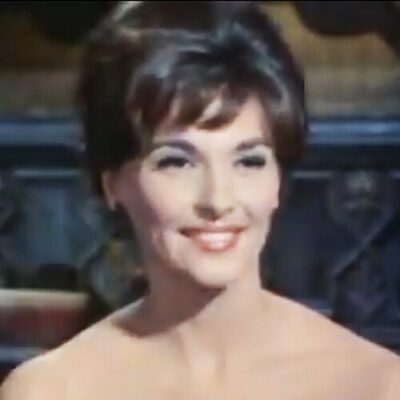
Nancy Kovack
Nancy Kovack is an American actress. Born March 11, 1935, in Flint. Educated at University of Michigan.
Facts
10 facts · 0 confirmed by two sources · 4 cited · 5 from one source · 1 where the sources disagree
What’s different
- Born: we show March 11, 1935 (Sources disagree). Wikipedia says March 11, 1936
Where this comes from
Papalocal keeps its own record. It started from these sources; what each one said is kept here as it was copied, so a change on their side never changes this page by itself. Tap one to read its version.
What Wikidata says · copied November 16, 2026 · revision 2567473224
- Described as
- American actress
- Born
- March 11, 1935
- Born in
- Flint · 1 reference
- Citizen of
- United States
- Occupation
- stage actor; film actor · 1 reference; television actor; model; actor · 1 reference
- Education
- University of Michigan
- Spouse
- Zubin Mehta (1969–) · 1 reference
- Wikipedias with a page
- 20
Wikidata item Q448566 (wikidata.org/wiki/Q448566), public domain (CC0). Copied November 16, 2026.
What Wikipedia says · copied November 16, 2026 · revision 1380971436
Nancy Kovack (born March 11, 1936) is a retired American film and television actress.
Starting in Broadway, she gained roles in films with one of her notable early roles being the high priestess Medea in Jason and the Argonauts (1963). She continued with several film roles including in such films as Frankie and Johnny (1966) with Elvis Presley, but also appeared on many TV shows including as a femme fatale in one of the original Star Trek episodes, "A Private Little War" (1968). She was nominated for a Primetime Emmy Award for Outstanding Single Performance by an Actress in a Supporting Role for an appearance on Mannix.
- Born, in its opening lines
- March 11, 1936
From the Wikipedia article “Nancy Kovack” (en.wikipedia.org/wiki/Nancy_Kovack), by its contributors, under CC BY-SA 4.0 (creativecommons.org/licenses/by-sa/4.0/). Copied November 16, 2026; not changed.
Confirmed Two sources agree. Cited One source, and it names where it got it. One source One source, without a reference of its own. Sources disagree The sources disagree. We show the best-supported value and keep theirs below.
