
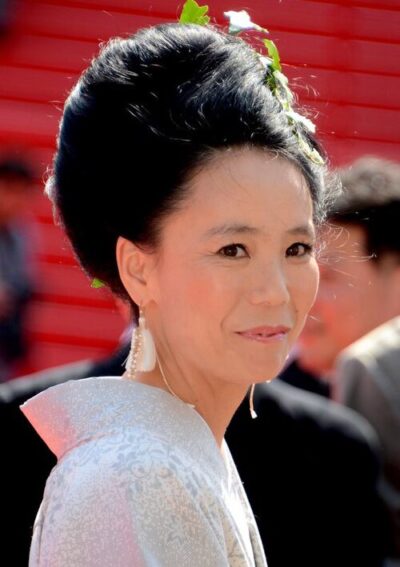
Naomi Kawase
Naomi Kawase is a Japanese filmmaker. Born May 30, 1969, in Nara. Awards include Caméra d'Or, Cannes Film Festival Grand Prix and Carrosse d'or.
Facts
18 facts · 1 confirmed by two sources · 7 cited · 10 from one source
Where this comes from
Papalocal keeps its own record. It started from these sources; what each one said is kept here as it was copied, so a change on their side never changes this page by itself. Tap one to read its version.
What Wikidata says · copied November 16, 2026 · revision 2568215841
- Described as
- Japanese filmmaker
- Other names
- Kawase Naomi, Naomi Sentō, Sentō Naomi
- Born
- May 30, 1969 · 2 references
- Born in
- Nara · 1 reference
- Citizen of
- Japan
- Occupation
- film director · 1 reference; screenwriter · 1 reference; film editor; film producer · 1 reference; cinematographer; actor · 1 reference; manufacturer · 1 reference; director · 1 reference
- Awards
- Caméra d'Or (1997); Cannes Film Festival Grand Prix (2007); Carrosse d'or (2009); Chevalier des Arts et des Lettres (2015) · 1 reference; Mainichi Film Award for Best Director
- Spouse
- Takenori Sentō (1997–2000)
- Website
- http://www.kawasenaomi.com/
- Wikipedias with a page
- 29
Wikidata item Q271247 (wikidata.org/wiki/Q271247), public domain (CC0). Copied November 16, 2026.
What Wikipedia says · copied November 16, 2026 · revision 1379276304
Naomi Kawase (; Japanese: 河瀨直美, romanized: Kawase Naomi; born 30 May 1969) is a Japanese film director. She was also briefly known as Naomi Sento (仙頭直美, Sentō Naomi), with her former husband's surname. Many of her works have been documentaries, including Embracing, about her search for the father who abandoned her as a child, and Katatsumori, about the grandmother who raised her.
- Born, in its opening lines
- May 30, 1969
From the Wikipedia article “Naomi Kawase” (en.wikipedia.org/wiki/Naomi_Kawase), by its contributors, under CC BY-SA 4.0 (creativecommons.org/licenses/by-sa/4.0/). Copied November 16, 2026; not changed.
Confirmed Two sources agree. Cited One source, and it names where it got it. One source One source, without a reference of its own. Sources disagree The sources disagree. We show the best-supported value and keep theirs below.
