
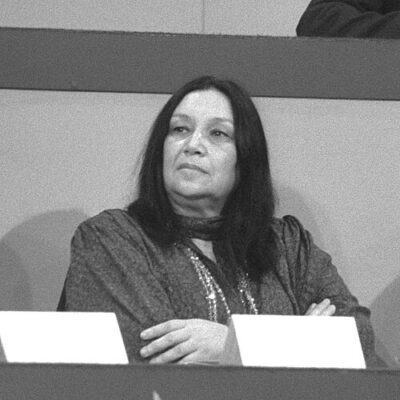
Naomi Shemer
Naomi Shemer was an Israeli poet and songwriter. Born July 13, 1930, in Kvutzat Kinneret. Died June 26, 2004, in Tel Aviv Sourasky Medical Center. Known for Jerusalem of Gold. Educated at Jerusalem Academy of Music and Dance. Awards include Israel Prize, honorary doctor of Tel Aviv University and honorary doctor of the Hebrew University of Jerusalem.
Facts
25 facts · 2 confirmed by two sources · 4 cited · 19 from one source
Where this comes from
Papalocal keeps its own record. It started from these sources; what each one said is kept here as it was copied, so a change on their side never changes this page by itself. Tap one to read its version.
What Wikidata says · copied November 17, 2026 · revision 2530401164
- Described as
- Israeli poet and songwriter
- Other names
- Naomi Schemer
- Born
- July 13, 1930 · 4 references
- Died
- June 26, 2004 · 4 references
- Born in
- Kvutzat Kinneret
- Died in
- Tel Aviv Sourasky Medical Center · 2 references
- Buried in
- Kinneret Cemetery
- Cause of death
- cancer · 1 reference
- Citizen of
- Israel
- Occupation
- composer · 1 reference; singer · 1 reference; songwriter
- Education
- Jerusalem Academy of Music and Dance
- Genre
- music of Israel
- Instrument
- voice; piano
- Known for
- Jerusalem of Gold
- Awards
- Israel Prize (1983); honorary doctor of Tel Aviv University; honorary doctor of the Hebrew University of Jerusalem; honorary doctor of Ben-Gurion University
- Field
- poetry; music composing
- Spouse
- Mordechai Horowitz; Gideon Shemer
- Children
- Ariel Horowitz
- Website
- https://naomi-shemer.co.il/ · 1 reference
- Wikipedias with a page
- 27
Wikidata item Q238719 (wikidata.org/wiki/Q238719), public domain (CC0). Copied November 17, 2026.
What Wikipedia says · copied November 17, 2026 · revision 1374418271
Naomi Shemer (Hebrew: נׇעֳמִי שֶׁמֶר; 13 July 1930 – 26 June 2004) was an Israeli songwriter, composer, and performer, widely described as the "first lady of Israeli song". She became one of the most influential figures in modern Hebrew music, writing numerous songs that became cultural touchstones, most notably "Yerushalayim Shel Zahav" ("Jerusalem of Gold"), which gained prominence after the Six-Day War and is often regarded as a second national anthem. Over a career spanning several decades, Shemer created music for adults and children, contributed to major festivals and cultural events, and became widely recognized for shaping the Israeli songbook.
- Born, in its opening lines
- July 13, 1930
- Died, in its opening lines
- June 26, 2004
From the Wikipedia article “Naomi Shemer” (en.wikipedia.org/wiki/Naomi_Shemer), by its contributors, under CC BY-SA 4.0 (creativecommons.org/licenses/by-sa/4.0/). Copied November 17, 2026; not changed.
Confirmed Two sources agree. Cited One source, and it names where it got it. One source One source, without a reference of its own. Sources disagree The sources disagree. We show the best-supported value and keep theirs below.
