
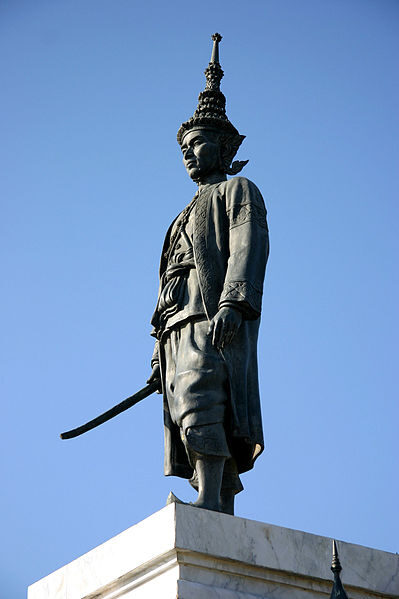
Narai
Narai was the 27th monarch of the Ayutthaya Kingdom. Born February 16, 1632, in Phra Ratchawang Boran. Died July 11, 1688, in King Narai's Palace. Positions held include King of Thailand (1656–1688) and Front Palace (1656). Known for Samuttharakhot Kham Chan.
Facts
24 facts · 0 confirmed by two sources · 1 cited · 23 from one source
Where this comes from
Papalocal keeps its own record. It started from these sources; what each one said is kept here as it was copied, so a change on their side never changes this page by itself. Tap one to read its version.
What Wikidata says · copied November 17, 2026 · revision 2563421463
- Described as
- 27th monarch of the Ayutthaya Kingdom (1656-88)
- Other names
- King Narai the Great, Ramathibodi III
- Born
- February 16, 1632
- Died
- July 11, 1688 · 1 reference
- Born in
- Phra Ratchawang Boran · 1 reference
- Died in
- King Narai's Palace
- Buried in
- Wat Phra Sri Sanphet
- Name at birth
- นรินทกุมาร
- Citizen of
- Ayutthaya Kingdom; Thailand
- Occupation
- sovereign; poet; politician; military officer
- Positions held
- King of Thailand (1656–1688); Front Palace (1656)
- Known for
- Samuttharakhot Kham Chan
- Field
- Klon
- Spouse
- Phra Kasattri
- Children
- Yothathep
- Father
- Prasat Thong
- Siblings
- Srisuphan
- Religion
- Theravāda
- Lived in
- Phra Ratchawang Boran; Chandra Kasem palace; King Narai's Palace
- Wikipedias with a page
- 25
Wikidata item Q718197 (wikidata.org/wiki/Q718197), public domain (CC0). Copied November 17, 2026.
What Wikipedia says · copied November 17, 2026 · revision 1385034234
King Narai the Great (Thai: สมเด็จพระนารายณ์มหาราช, RTGS: Somdet Phra Narai Maharat, pronounced [sǒm.dèt pʰráʔ nāː.rāːj mā.hǎː.râːt] ), or Ramathibodi III (Thai: รามาธิบดีที่ ๓ ), was the 27th monarch of Ayutthaya Kingdom, the 4th and last monarch of the Prasat Thong dynasty. He was the king of Ayutthaya Kingdom from 1656 to 1688 and arguably the most famous king of the Prasat Thong dynasty.
His reign was the most prosperous during the Ayutthaya period and saw the great commercial and diplomatic activities with foreign nations including the Middle East and the West. During the later years of his reign, Narai gave his favorite – the Greek adventurer Constantine Phaulkon – so much power that Phaulkon technically became the chancellor of the state. Through the arrangements of Phaulkon, the Siamese kingdom came into close diplomatic relations with the court of Louis XIV and French soldiers and missionaries filled the Siamese aristocracy and defense. The dominance of French officials led to frictions between them and the native mandarins and led to the turbulent revolution of 1688 towards the end of his reign.
Narai's reign was also known for the 1662–1664 invasion of Burma, the destruction of the briefly independent port city of the Sultanate of Singgora (1605–1680), and the conflict he had with the English East India Company.
The presence of numerous foreigners from the French Jesuits to the Persian delegates has left historians with rich sources of material on the city of Ayutthaya and its conflicts and courtly life in the seventeenth century that otherwise would not have survived the complete destruction of the capital in 1767.
From the Wikipedia article “Narai” (en.wikipedia.org/wiki/Narai), by its contributors, under CC BY-SA 4.0 (creativecommons.org/licenses/by-sa/4.0/). Copied November 17, 2026; not changed.
Confirmed Two sources agree. Cited One source, and it names where it got it. One source One source, without a reference of its own. Sources disagree The sources disagree. We show the best-supported value and keep theirs below.
