
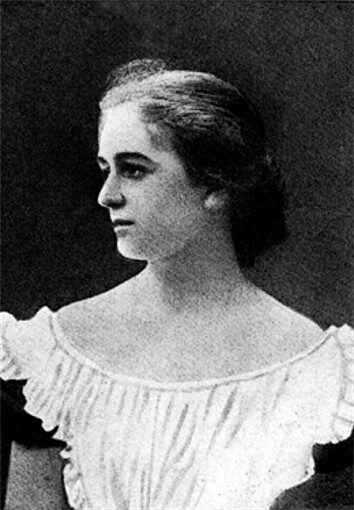
Natalena Koroleva
Natalena Koroleva was an Ukrainian writer. Born March 3, 1888, in Monastery of San Pedro de Cardeña. Died July 1, 1966, in Mělník. Educated at The Imperial Saint Petersburg Archaeological Institute.
Facts
15 facts · 2 confirmed by two sources · 1 cited · 12 from one source
Where this comes from
Papalocal keeps its own record. It started from these sources; what each one said is kept here as it was copied, so a change on their side never changes this page by itself. Tap one to read its version.
What Wikidata says · copied November 18, 2026 · revision 2565779037
- Described as
- Ukrainian writer (1888-1966)
- Other names
- Carmen-Alfonsa-Fernanda-Estrella-Natalena Koroleva
- Born
- March 3, 1888
- Died
- July 1, 1966
- Born in
- Monastery of San Pedro de Cardeña
- Died in
- Mělník
- Buried in
- Hřbitov svatého Václava
- Occupation
- writer · 1 reference; archaeologist; opera singer; painter · 1 reference; stage actor
- Education
- The Imperial Saint Petersburg Archaeological Institute
- Genre
- short novel · 1 reference
- Instrument
- voice
- Spouse
- Vasily Koroliv
- Lived in
- Volhynia
- Wikipedias with a page
- 20
Wikidata item Q3504672 (wikidata.org/wiki/Q3504672), public domain (CC0). Copied November 18, 2026.
What Wikipedia says · copied November 18, 2026 · revision 1286059058
Carmen-Alfonsa-Fernanda-Estrella-Natalena Koroleva (3 March 1888 – 1 July 1966) was a Ukrainian writer.
The daughter of Count Adrian Yurii Dunin-Borkovsky, of Polish descent, and Maria Clara de Castro Lacerda, from an aristocratic Spanish family, she was born Carmen-Alfonsa-Fernanda-Estrella-Natalena Dunin-Borkowska in San Pedro de Cardeña near Burgos, Spain. Her mother died while giving birth to her. Koroleva grew up in Spain, Ukraine, France and Italy. She was educated at the Convent of Notre Dame de Sion in France, the Kyiv Institute for Noble Maidens and the Archeological Institute in Saint Petersburg. She studied history, archaeology, philosophy, medicine and music theory and was fluent in a number of languages including French, Polish, Spanish, Arabic and Italian. Koroleva participated in archaeological expeditions to Pompeii, Alexandria, Armenia and Iran.
Her first work, written in French, was published in journals in Paris in 1909. She returned to Kyiv in 1914 because her father was ill. She served as a Red Cross nurse during World War I and was seriously wounded. In 1919, she moved to Czechoslovakia, where she worked as a translator for the Ukrainian diplomatic mission in Prague. In 1921, she published her first Ukrainian work, a short story, in the Ukrainian-language weekly Volia in Vienna. Her stories were published in various Ukrainian-language publications, especially Dzvony. She also translated works by other authors into Ukrainian.
Her first husband Iskander ibn Kurush was an Iranian serving in the Russian army who died in battle in 1915. Later, in Prague, she married Vasyl Koroliv-Stary, a Ukrainian writer and publisher; he died in 1941.
During her lifetime, she was criticized because her plots and characters were often abstract and did not reflect Ukrainian reality. Now, she is recognized for her unique contributions to Ukrainian literature.
She died in Mělník at the age of 78.
- Born, in its opening lines
- March 3, 1888
- Died, in its opening lines
- July 1, 1966
From the Wikipedia article “Natalena Koroleva” (en.wikipedia.org/wiki/Natalena_Koroleva), by its contributors, under CC BY-SA 4.0 (creativecommons.org/licenses/by-sa/4.0/). Copied November 18, 2026; not changed.
Confirmed Two sources agree. Cited One source, and it names where it got it. One source One source, without a reference of its own. Sources disagree The sources disagree. We show the best-supported value and keep theirs below.
