
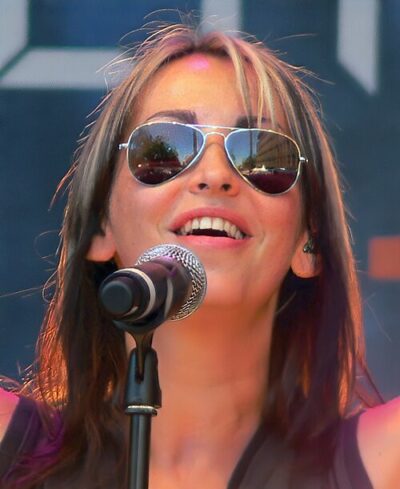
Natalie Appleton
Natalie Appleton is a Canadian singer. Born May 14, 1973, in Mississauga. Educated at Sylvia Young Theatre School.
Facts
15 facts · 1 confirmed by two sources · 2 cited · 12 from one source
Where this comes from
Papalocal keeps its own record. It started from these sources; what each one said is kept here as it was copied, so a change on their side never changes this page by itself. Tap one to read its version.
What Wikidata says · copied November 16, 2026 · revision 2565581212
- Described as
- Canadian singer
- Other names
- Natalie Jane Appleton, Natalie Jane Appleton Howlett
- Born
- May 14, 1973
- Born in
- Mississauga
- Citizen of
- Canada
- Occupation
- singer · 1 reference; actor
- Education
- Sylvia Young Theatre School
- Member of
- All Saints (1996–); Appleton · 2 references
- Genre
- pop music
- Instrument
- voice
- Record label
- Polydor Records; London Records
- Spouse
- Liam Howlett (2002–) · 1 reference
- Children
- Rachel Appleton
- Siblings
- Nicole Appleton · 2 references
- Wikipedias with a page
- 20
Wikidata item Q2426357 (wikidata.org/wiki/Q2426357), public domain (CC0). Copied November 16, 2026.
What Wikipedia says · copied November 16, 2026 · revision 1384287907
Natalie Jane Appleton Howlett (born 14 May 1973) is a Canadian singer. She is a member of the British girl group All Saints and the duo Appleton with her younger sister Nicole Appleton.
Appleton joined All Saints in 1996, becoming the fourth and final member of the group, but five years later they split up amid group in-fighting. She went on to form a duo with Nicole, under the name Appleton. Since then, she has reunited to release three more albums with All Saints, in 2006, 2016 and 2018.
- Born, in its opening lines
- May 14, 1973
From the Wikipedia article “Natalie Appleton” (en.wikipedia.org/wiki/Natalie_Appleton), by its contributors, under CC BY-SA 4.0 (creativecommons.org/licenses/by-sa/4.0/). Copied November 16, 2026; not changed.
Confirmed Two sources agree. Cited One source, and it names where it got it. One source One source, without a reference of its own. Sources disagree The sources disagree. We show the best-supported value and keep theirs below.
