
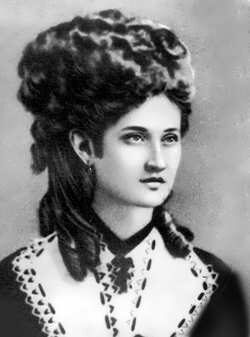
Nataliya Kobrynska
Nataliya Kobrynska was an Ukrainian writer, editor. Born June 8, 1855, in Beleluia. Died January 22, 1920, in Bolekhiv.
Facts
16 facts · 2 confirmed by two sources · 4 cited · 10 from one source
Where this comes from
Papalocal keeps its own record. It started from these sources; what each one said is kept here as it was copied, so a change on their side never changes this page by itself. Tap one to read its version.
What Wikidata says · copied November 16, 2026 · revision 2536301447
- Described as
- Ukrainian writer, editor (1855-1920)
- Other names
- Nataliia Ivanivna Kobryns'ka, Nataliia Kobryns'ka, Natalia Kobrynska
- Born
- June 8, 1855 · 2 references
- Died
- January 22, 1920 · 2 references
- Born in
- Beleluia
- Died in
- Bolekhiv
- Buried in
- Woloski cemetery, Bolekhiv
- Cause of death
- typhus
- Citizen of
- Austria–Hungary; West Ukrainian People's Republic
- Occupation
- writer · 1 reference; women's rights activist; editor · 1 reference; feminist · 1 reference; activist · 1 reference
- Field
- writer
- Father
- Ivan Ozarkevych
- Siblings
- Volodymyr Ozarkevych
- Wikipedias with a page
- 36
Wikidata item Q4225202 (wikidata.org/wiki/Q4225202), public domain (CC0). Copied November 16, 2026.
What Wikipedia says · copied November 16, 2026 · revision 1383257040
Nataliya Kobrynska (Ukrainian: Наталія Кобринська, 8 June 1855 – 22 January 1920) was a Ukrainian writer, socialist feminist, and activist from Austria-Hungary. She served as the first head of the Society of Ukrainian Women following its establishment in 1884. Kobrynska has been recognized as the leading figure in the development of Ukraine's feminist movement.
- Born, in its opening lines
- June 8, 1855
- Died, in its opening lines
- January 22, 1920
From the Wikipedia article “Nataliya Kobrynska” (en.wikipedia.org/wiki/Nataliya_Kobrynska), by its contributors, under CC BY-SA 4.0 (creativecommons.org/licenses/by-sa/4.0/). Copied November 16, 2026; not changed.
Confirmed Two sources agree. Cited One source, and it names where it got it. One source One source, without a reference of its own. Sources disagree The sources disagree. We show the best-supported value and keep theirs below.
