
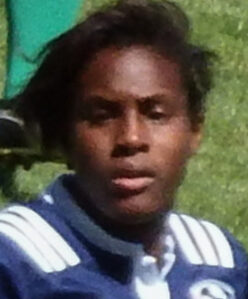
Naya Tapper is an American rugby union player. Born August 3, 1994, in Beaufort. Teams include United States women's national rugby union team (2016). Educated at West Mecklenburg High School.
Facts
10 facts · 1 confirmed by two sources · 2 cited · 7 from one source
Where this comes from
Papalocal keeps its own record. It started from these sources; what each one said is kept here as it was copied, so a change on their side never changes this page by itself. Tap one to read its version.
What Wikidata says · copied November 19, 2026 · revision 2559303476
- Described as
- American rugby union player (1994-)
- Other names
- Naya Elena Tapper
- Born
- August 3, 1994
- Born in
- Beaufort · 1 reference
- Citizen of
- United States
- Occupation
- rugby union player; rugby sevens player · 1 reference
- Education
- West Mecklenburg High School
- Teams
- United States women's national rugby union team (2016)
- Sport
- rugby union; rugby sevens · 1 reference
- Height
- 1.75 m (5 ft 9 in) · 1 reference
- Wikipedias with a page
- 10
Wikidata item Q41000266 (wikidata.org/wiki/Q41000266), public domain (CC0). Copied November 19, 2026.
What Wikipedia says · copied November 19, 2026 · revision 1385461556
Naya Elena Tapper (born August 3, 1994) is an American retired rugby sevens player. She was a co-captain of the United States women's rugby sevens team and competed in rugby sevens at the 2020 Summer Olympics in Tokyo and the 2024 Summer Olympics in Paris, where Team USA took home the bronze medal.
Tapper was the first U.S. woman to reach 100 tries and is the all-time leading try scorer for the USA women's team. Her chase down tackle that saved a try against Ireland at the 2021 Dubai Sevens was named the #1 Play on ESPN's SportCenter Top 10 plays.
- Born, in its opening lines
- August 3, 1994
From the Wikipedia article “Naya Tapper” (en.wikipedia.org/wiki/Naya_Tapper), by its contributors, under CC BY-SA 4.0 (creativecommons.org/licenses/by-sa/4.0/). Copied November 19, 2026; not changed.
Confirmed Two sources agree. Cited One source, and it names where it got it. One source One source, without a reference of its own. Sources disagree The sources disagree. We show the best-supported value and keep theirs below.
