
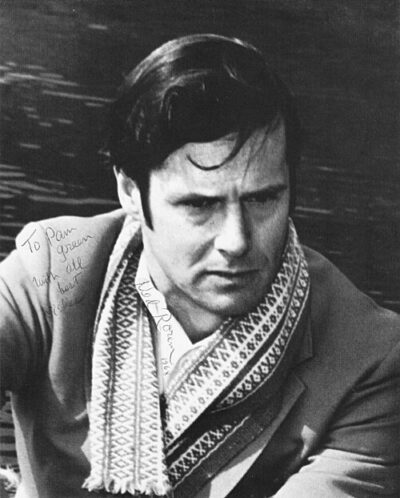
Ned Rorem
Ned Rorem was an American composer and diarist. Born October 23, 1923, in Richmond. Died November 18, 2022, in Manhattan. Known for Piano Concerto No. 2. Educated at Juilliard School and Curtis Institute of Music. Awards include Chevalier des Arts et des Lettres, Guggenheim Fellowship and Rome Prize.
Facts
32 facts · 2 confirmed by two sources · 15 cited · 15 from one source
Where this comes from
Papalocal keeps its own record. It started from these sources; what each one said is kept here as it was copied, so a change on their side never changes this page by itself. Tap one to read its version.
What Wikidata says · copied November 16, 2026 · revision 2558180195
- Described as
- American composer and diarist (1923–2022)
- Born
- October 23, 1923 · 6 references
- Died
- November 18, 2022 · 2 references
- Born in
- Richmond · 1 reference
- Died in
- Manhattan · 1 reference
- Citizen of
- United States
- Occupation
- composer · 3 references; diarist; writer · 2 references; university teacher; actor; pianist · 1 reference
- Education
- Juilliard School (–1948) · 1 reference; Curtis Institute of Music · 1 reference; Northwestern University · 1 reference; American Conservatory of Music; University of Chicago Laboratory Schools; Bienen School of Music
- Member of
- American Academy of Arts and Letters; American Academy of Arts and Sciences
- Genre
- opera; symphony
- Known for
- Piano Concerto No. 2
- Awards
- Chevalier des Arts et des Lettres; Guggenheim Fellowship · 1 reference; Rome Prize; Pulitzer Prize for Music (1976) · 1 reference; Arts and Letters Award in Music (1968) · 1 reference
- Field
- music · 1 reference
- Lived in
- Chicago · 1 reference; Morocco · 1 reference; Paris (1949–) · 1 reference
- Website
- http://www.nedrorem.net
- Wikipedias with a page
- 20
Wikidata item Q733299 (wikidata.org/wiki/Q733299), public domain (CC0). Copied November 16, 2026.
What Wikipedia says · copied November 16, 2026 · revision 1370822097
Ned Miller Rorem (October 23, 1923 – November 18, 2022) was an American composer of contemporary classical music and a writer. Best known for his art songs, which number over 500, Rorem was considered the leading American of his time writing in the genre. Frequently described as a neoromantic composer, he showed limited interest in the emerging modernist aesthetic of his lifetime. As a writer, he kept—and later published—numerous diaries in which he spoke candidly of his exchanges and relationships with many cultural figures of America and France.
Born in Richmond, Indiana, Rorem found an early interest in music, studying with Margaret Bonds and Leo Sowerby. He developed a strong enthusiasm for French music and received mentorship from Aaron Copland and Virgil Thomson, among others. After two productive years in Morocco, Rorem was hosted by the arts patron Marie-Laure de Noailles in Paris, where he was influenced by the neoclassicist group Les Six, particularly Francis Poulenc and Darius Milhaud. He returned to America in around 1957, establishing himself as a prominent composer and receiving regular commissions. For the American Bicentennial, he worked on seven different commissions concurrently, among which was Air Music: Ten Etudes for Orchestra, which won a Pulitzer Prize for Music in 1976.
Much of Rorem's life was spent with his lifelong partner James Holmes, between his apartment in New York and house in Nantucket. From 1980 onwards he taught at the Curtis Institute. He wrote the large-scale song cycle Evidence of Things Not Seen (1997) to 36 texts by 24 writers, for the New York Festival of Song. It is considered by commentators and Rorem himself to be his magnum opus. Much of his later compositions were devoted to concertante and his final major work was the opera Our Town (2006).
- Born, in its opening lines
- October 23, 1923
- Died, in its opening lines
- November 18, 2022
From the Wikipedia article “Ned Rorem” (en.wikipedia.org/wiki/Ned_Rorem), by its contributors, under CC BY-SA 4.0 (creativecommons.org/licenses/by-sa/4.0/). Copied November 16, 2026; not changed.
Confirmed Two sources agree. Cited One source, and it names where it got it. One source One source, without a reference of its own. Sources disagree The sources disagree. We show the best-supported value and keep theirs below.
