
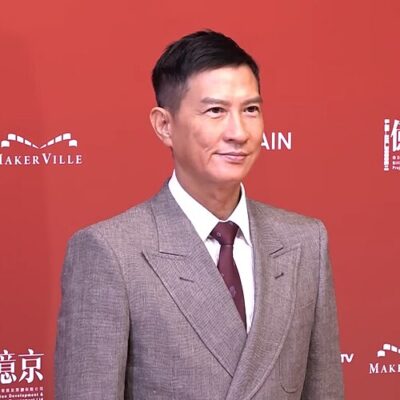
Nick Cheung is a Hong Kong actor. Born December 2, 1964, in British Hong Kong. Awards include Golden Horse Award for Best Leading Actor.
Facts
11 facts · 1 confirmed by two sources · 1 cited · 9 from one source
Where this comes from
Papalocal keeps its own record. It started from these sources; what each one said is kept here as it was copied, so a change on their side never changes this page by itself. Tap one to read its version.
What Wikidata says · copied November 18, 2026 · revision 2554710548
- Described as
- Hong Kong actor
- Other names
- Cheung Ka-fai, Nick Cheung Ka Fai, Nick Cheung Ka-fai
- Born
- December 2, 1964 · 2 references
- Born in
- British Hong Kong
- Citizen of
- People's Republic of China (1997–); British Hong Kong (–1997)
- Occupation
- actor; film director; television actor; film actor
- Genre
- cantopop · 1 reference
- Awards
- Golden Horse Award for Best Leading Actor (2009) · 1 reference
- Spouse
- Esther Kwan (2003–)
- Wikipedias with a page
- 20
Wikidata item Q701930 (wikidata.org/wiki/Q701930), public domain (CC0). Copied November 18, 2026.
What Wikipedia says · copied November 18, 2026 · revision 1373935361
Nicholas Cheung Ka-fai (Chinese: 張家輝; Jyutping: zoeng1 gaa1 fai1; born 2 December 1964) is a Hong Kong actor, singer and director. He first gained recognition for his roles in The Conman (1998) and The Tricky Master (1999). He went on to star in the films Beast Stalker (2008), The Stool Pigeon (2010), Nightfall (2012), Unbeatable (2013), The White Storm (2013), Helios (2015), Keeper of Darkness (2015), Line Walker (2016), Bodies at Rest (2019), and Peg O' My Heart (2024). For his performances in Beast Stalker and Unbeatable, Cheung was awarded the Hong Kong Film Award for Best Actor.
- Born, in its opening lines
- December 2, 1964
From the Wikipedia article “Nick Cheung” (en.wikipedia.org/wiki/Nick_Cheung), by its contributors, under CC BY-SA 4.0 (creativecommons.org/licenses/by-sa/4.0/). Copied November 18, 2026; not changed.
Confirmed Two sources agree. Cited One source, and it names where it got it. One source One source, without a reference of its own. Sources disagree The sources disagree. We show the best-supported value and keep theirs below.
