
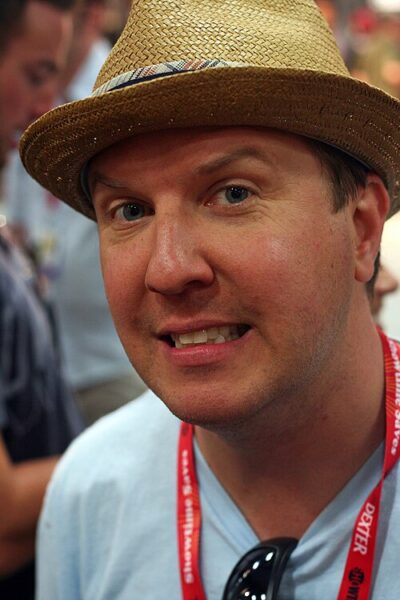
Nick Swardson
Nick Swardson is an American comedian. Born October 9, 1976, in Minneapolis. Educated at St. Paul Central High School.
Facts
10 facts · 1 confirmed by two sources · 1 cited · 8 from one source
Where this comes from
Papalocal keeps its own record. It started from these sources; what each one said is kept here as it was copied, so a change on their side never changes this page by itself. Tap one to read its version.
What Wikidata says · copied November 15, 2026 · revision 2563879903
- Described as
- American comedian
- Other names
- Nicholas Roger "Nick" Swardson, Nicholas Roger Swardson
- Born
- October 9, 1976 · 2 references
- Born in
- Minneapolis
- Citizen of
- United States
- Occupation
- comedian; screenwriter; television actor; film actor; film producer · 1 reference; actor · 1 reference
- Education
- St. Paul Central High School
- Wikipedias with a page
- 28
Wikidata item Q984077 (wikidata.org/wiki/Q984077), public domain (CC0). Copied November 15, 2026.
What Wikipedia says · copied November 15, 2026 · revision 1384659338
Nicholas Roger Swardson (born October 9, 1976) is an American actor, stand-up comedian, screenwriter, and producer. He is best known for his recurring role as Terry Bernadino in the comedy series Reno 911! (2003–2009), for his work with Adam Sandler's Happy Madison Productions, and for his own personal sketch comedy series Nick Swardson's Pretend Time (2010–2011).
He starred as the title character in Bucky Larson: Born to Be a Star (2011), and has appeared in the films Grandma's Boy (2006), I Now Pronounce You Chuck & Larry (2007), The House Bunny, (2008), Just Go With It, 30 Minutes or Less (both 2011), Grown Ups 2 (2013), The Ridiculous 6 (2015), Sandy Wexler (2017), Airplane Mode (2019), and Happy Gilmore 2 (2025).
- Born, in its opening lines
- October 9, 1976
From the Wikipedia article “Nick Swardson” (en.wikipedia.org/wiki/Nick_Swardson), by its contributors, under CC BY-SA 4.0 (creativecommons.org/licenses/by-sa/4.0/). Copied November 15, 2026; not changed.
Confirmed Two sources agree. Cited One source, and it names where it got it. One source One source, without a reference of its own. Sources disagree The sources disagree. We show the best-supported value and keep theirs below.
