
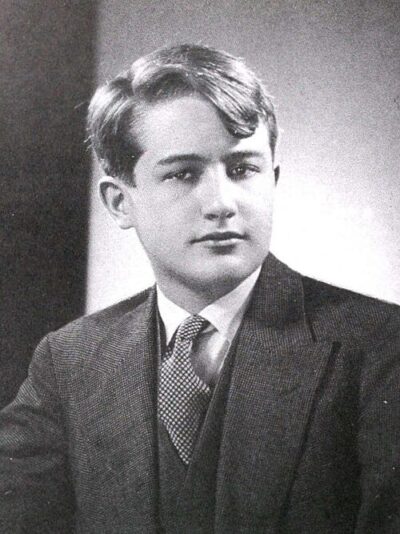
Nicolás Gómez Dávila
Nicolás Gómez Dávila was a Colombian writer and philosopher. Born May 18, 1913, in Bogotá. Died May 17, 1994, in Bogotá.
Facts
10 facts · 2 confirmed by two sources · 4 cited · 4 from one source
Where this comes from
Papalocal keeps its own record. It started from these sources; what each one said is kept here as it was copied, so a change on their side never changes this page by itself. Tap one to read its version.
What Wikidata says · copied November 16, 2026 · revision 2567243260
- Described as
- Colombian writer and philosopher (1913–1994)
- Other names
- Nicolas Gomez Davila
- Born
- May 18, 1913 · 1 reference
- Died
- May 17, 1994 · 1 reference
- Born in
- Bogotá · 1 reference
- Died in
- Bogotá · 1 reference
- Cause of death
- cardiovascular disease
- Citizen of
- Colombia
- Occupation
- writer · 1 reference; philosopher · 1 reference; aphorist
- Religion
- traditionalist Catholicism
- Wikipedias with a page
- 35
Wikidata item Q1315471 (wikidata.org/wiki/Q1315471), public domain (CC0). Copied November 16, 2026.
What Wikipedia says · copied November 16, 2026 · revision 1379806053
Nicolás Gómez Dávila (18 May 1913 – 17 May 1994) was a Colombian philosopher and aphorist. He is sometimes referred to as the "Nietzsche of the Andes."
For a long time not appearing particularly interested in a mass propagation of his work, Gómez Dávila remained an obscure figure until the final few years of his life, when translations attracted important attention, mainly in German-speaking countries.
Gómez Dávila was a staunch critic of modernity. His work consists almost entirely of aphorisms which he called "escolios" ("scholia" or "glosses").
- Born, in its opening lines
- May 18, 1913
- Died, in its opening lines
- May 17, 1994
From the Wikipedia article “Nicolás Gómez Dávila” (en.wikipedia.org/wiki/Nicolás_Gómez_Dávila), by its contributors, under CC BY-SA 4.0 (creativecommons.org/licenses/by-sa/4.0/). Copied November 16, 2026; not changed.
Confirmed Two sources agree. Cited One source, and it names where it got it. One source One source, without a reference of its own. Sources disagree The sources disagree. We show the best-supported value and keep theirs below.
