
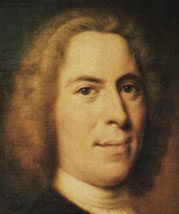
Nicolaus Zinzendorf
Nicolaus Zinzendorf was a German protestant religious and social reformer, bishop of the Moravian Church. Born May 26, 1700, in Dresden. Died May 9, 1760, in Herrnhut. Positions held include bishop of the Moravian Church. Educated at Martin Luther University Halle-Wittenberg.
Facts
27 facts · 2 confirmed by two sources · 12 cited · 13 from one source
Where this comes from
Papalocal keeps its own record. It started from these sources; what each one said is kept here as it was copied, so a change on their side never changes this page by itself. Tap one to read its version.
What Wikidata says · copied November 16, 2026 · revision 2568959640
- Described as
- German protestant religious and social reformer, bishop of the Moravian Church (1700-1760)
- Other names
- Zinzendorf, Nicholas Ludwig, Graf von Zinzendorf und Pottendorf
- Born
- May 26, 1700 · 10 references
- Died
- May 9, 1760 · 3 references
- Born in
- Dresden · 1 reference
- Died in
- Herrnhut · 1 reference
- Buried in
- Herrnhuter Gottesacker
- Citizen of
- Germany
- Occupation
- translator; poet; hymnwriter · 1 reference; writer; Protestant reformer · 1 reference; reformer · 1 reference; presbyter; missionary · 1 reference
- Positions held
- bishop of the Moravian Church
- Worked for
- Martin Luther University Halle-Wittenberg
- Education
- Martin Luther University Halle-Wittenberg
- Member of
- Moravian Church
- Field
- theology · 1 reference
- Spouse
- Erdmuthe Dorothea of Reuss-Ebersdorf · 1 reference; Anna Rupprecht Nitschmann
- Children
- Christian Renatus von Zinzendorf · 1 reference; Henrietta Benigna von Watteville · 1 reference
- Father
- Georg Ludwig Zinzendorf · 1 reference
- Mother
- Carlotta Justina von Gersdorff · 1 reference
- Religion
- Moravian Church; Unity of the Brethren
- Wikipedias with a page
- 42
Wikidata item Q76336 (wikidata.org/wiki/Q76336), public domain (CC0). Copied November 16, 2026.
What Wikipedia says · copied November 16, 2026 · revision 1358394750
Nikolaus Ludwig, Reichsgraf von Zinzendorf und Pottendorf (26 May 1700 – 9 May 1760) was a German religious and social reformer, bishop of the Moravian Church, founder of the Herrnhuter Brüdergemeine, Christian mission pioneer and a major figure of 18th-century Protestantism. Born in Dresden, Zinzendorf was called Ludwig or Brother Ludwig by his intimates. He was notable for providing shelter for German-speaking Moravian exiles at Herrnhut, an effort that was influenced by Pietist ideas from the Lutheran faith he was brought up in.
Zinzendorf was critical of slavery, and played a role in starting the Protestant mission movement by supporting two determined Moravian missionaries Johann Leonhard Dober and David Nitschmann to go (via Copenhagen) to the Danish colony of Saint Thomas to minister to the enslaved population there (see Moravian slaves). In spite of having Danish royal support from Charlotte Amalie of Denmark, these missionaries faced discouragement in several forms, including by some Moravians at Herrnhut (including Christian David), by the Danish West India Company, by planters in Saint Thomas, by the risk of getting malaria, and by the slaves themselves.
His projects were often misunderstood. In 1736 he was banished from Saxony, but in 1749 the government rescinded its decree and begged him to establish within its jurisdiction more settlements like that at Herrnhut. Zinzendorf's effect on the Moravian Church was significant, and is still evident nearly three centuries later. He is commemorated as a hymnwriter and a renewer of the church by the Evangelical Lutheran Church in America on its Calendar of Saints on 9 May.
- Born, in its opening lines
- May 26, 1700
- Died, in its opening lines
- May 9, 1760
From the Wikipedia article “Nicolaus Zinzendorf” (en.wikipedia.org/wiki/Nicolaus_Zinzendorf), by its contributors, under CC BY-SA 4.0 (creativecommons.org/licenses/by-sa/4.0/). Copied November 16, 2026; not changed.
Confirmed Two sources agree. Cited One source, and it names where it got it. One source One source, without a reference of its own. Sources disagree The sources disagree. We show the best-supported value and keep theirs below.
