
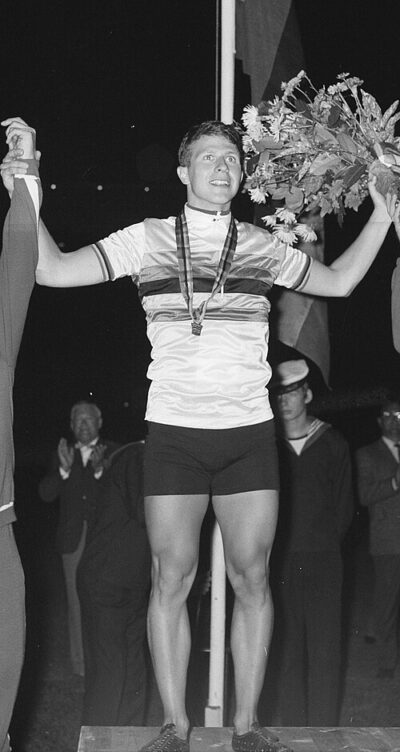
Niels Fredborg is a Danish racing cyclist, born 1946. Born October 28, 1946, in Odder. Teams include Aarhus Bane-Klub (1962–1978) and Carrera (1979). Awards include Danish Sports Hall of Fame.
Facts
10 facts · 1 confirmed by two sources · 0 cited · 9 from one source
Where this comes from
Papalocal keeps its own record. It started from these sources; what each one said is kept here as it was copied, so a change on their side never changes this page by itself. Tap one to read its version.
What Wikidata says · copied November 18, 2026 · revision 2526773842
- Described as
- Danish racing cyclist, born 1946
- Other names
- Niels Christian Fredborg
- Born
- October 28, 1946
- Born in
- Odder
- Name at birth
- Niels Christian Fredborg
- Citizen of
- Kingdom of Denmark
- Occupation
- sport cyclist
- Teams
- Aarhus Bane-Klub (1962–1978); Carrera (1979)
- Sport
- track cycling
- Awards
- Danish Sports Hall of Fame (1993)
- Height
- 1.76 m (5 ft 9 in) · 1 reference
- Wikipedias with a page
- 21
Wikidata item Q972002 (wikidata.org/wiki/Q972002), public domain (CC0). Copied November 18, 2026.
What Wikipedia says · copied November 18, 2026 · revision 1362165259
Niels Christian Fredborg (born 28 October 1946) is a Danish retired track cyclist. He competed at the 1964, 1968, 1972 and 1976 Summer Olympics in the sprint and 1 km time trial events, winning a silver, a gold and a bronze medal in the time trial in 1968, 1972 and 1976, respectively. In 1972 he was Denmark's only Olympic medalist.
At the Track Cycling World Championships, Fredborg won the 1 km time trial in 1967, 1968 and 1970. In 1969 he won the International Champion of Champions sprint at Herne Hill velodrome.
- Born, in its opening lines
- October 28, 1946
From the Wikipedia article “Niels Fredborg” (en.wikipedia.org/wiki/Niels_Fredborg), by its contributors, under CC BY-SA 4.0 (creativecommons.org/licenses/by-sa/4.0/). Copied November 18, 2026; not changed.
Confirmed Two sources agree. Cited One source, and it names where it got it. One source One source, without a reference of its own. Sources disagree The sources disagree. We show the best-supported value and keep theirs below.
