
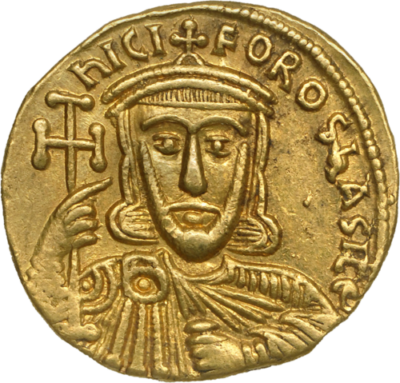
Nikephoros I
Nikephoros I was a Byzantine emperor. Born 750, in Pisidia. Died July 26, 811, in Pliska. Positions held include Byzantine emperor (802–811).
Facts
9 facts · 2 confirmed by two sources · 1 cited · 6 from one source
Where this comes from
Papalocal keeps its own record. It started from these sources; what each one said is kept here as it was copied, so a change on their side never changes this page by itself. Tap one to read its version.
What Wikidata says · copied November 16, 2026 · revision 2558182993
- Described as
- Byzantine emperor
- Born
- 750
- Died
- July 26, 811 · 1 reference
- Born in
- Pisidia
- Died in
- Pliska · 1 reference
- Citizen of
- Byzantine Empire
- Occupation
- ruler
- Positions held
- Byzantine emperor (802–811)
- Children
- Stauracius; Prokopia · 1 reference
- Wikipedias with a page
- 59
Wikidata item Q208754 (wikidata.org/wiki/Q208754), public domain (CC0). Copied November 16, 2026.
What Wikipedia says · copied November 16, 2026 · revision 1380905205
Nikephoros I (Greek: Νικηφόρος, romanized: Nikēphóros; 750 – 26 July 811), also known as Nicephorus I, was Byzantine emperor from 802 to 811. He was General Logothete (finance minister) under Empress Irene, but later overthrew her to seize the throne for himself. Prior to becoming emperor, he was sometimes referred to as "the Logothete" (Greek: ὁ Λογοθέτης, romanized: ō Logothētés) and "Genikos" or "Genicus" (Greek: ὁ Γενικός, romanized: ō Gēnikós), in recognition of his previous role as General Logothete.
During his reign, Nikephoros engaged in military campaigns against both the Arabs and the Bulgarians, although the outcomes were varied. While leading an invasion into Bulgaria, he suffered a defeat and was killed at the Battle of Pliska.
- Born, in its opening lines
- 750
- Died, in its opening lines
- July 26, 811
From the Wikipedia article “Nikephoros I” (en.wikipedia.org/wiki/Nikephoros_I), by its contributors, under CC BY-SA 4.0 (creativecommons.org/licenses/by-sa/4.0/). Copied November 16, 2026; not changed.
Confirmed Two sources agree. Cited One source, and it names where it got it. One source One source, without a reference of its own. Sources disagree The sources disagree. We show the best-supported value and keep theirs below.
