
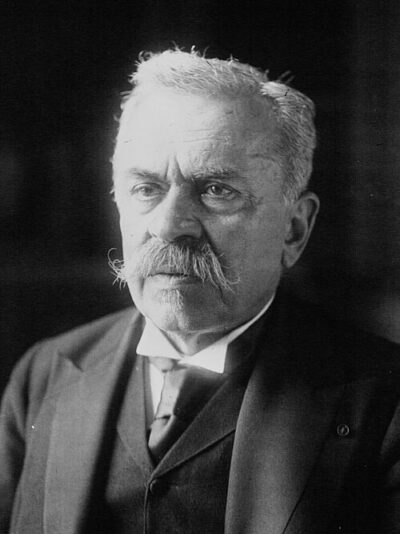
Nikolaos Kalogeropoulos
Nikolaos Kalogeropoulos was a Greek politician. Born July 23, 1851, in Chalkída. Died January 7, 1927, in Athens. Positions held include Prime Minister of Greece (2 times) (1916–1921), Minister for Foreign Affairs of Greece (1921) and Minister of Finance of Greece. Educated at National and Kapodistrian University of Athens.
Facts
17 facts · 2 confirmed by two sources · 3 cited · 12 from one source
Where this comes from
Papalocal keeps its own record. It started from these sources; what each one said is kept here as it was copied, so a change on their side never changes this page by itself. Tap one to read its version.
What Wikidata says · copied November 18, 2026 · revision 2562805840
- Described as
- Greek politician (1851-1927)
- Born
- July 23, 1851
- Died
- January 7, 1927 · 1 reference
- Born in
- Chalkída
- Died in
- Athens
- Citizen of
- Greece
- Occupation
- politician · 1 reference; head of government · 1 reference; foreign minister · 1 reference
- Positions held
- Prime Minister of Greece (2 times) (1916–1921); Minister for Foreign Affairs of Greece (1921); Minister of Finance of Greece; Minister of Military Affairs of Greece; Minister of Justice of Greece; member of the Hellenic Parliament
- Political party
- People's Party
- Education
- National and Kapodistrian University of Athens
- Religion
- Church of Greece
- Wikipedias with a page
- 21
Wikidata item Q548724 (wikidata.org/wiki/Q548724), public domain (CC0). Copied November 18, 2026.
What Wikipedia says · copied November 18, 2026 · revision 1378889743
Nikolaos Kalogeropoulos (Greek: Νικόλαος Καλογερόπουλος; 23 July 1851 – 7 January 1927) was a Greek politician and briefly Prime Minister of Greece.
- Born, in its opening lines
- July 23, 1851
- Died, in its opening lines
- January 7, 1927
From the Wikipedia article “Nikolaos Kalogeropoulos” (en.wikipedia.org/wiki/Nikolaos_Kalogeropoulos), by its contributors, under CC BY-SA 4.0 (creativecommons.org/licenses/by-sa/4.0/). Copied November 18, 2026; not changed.
Confirmed Two sources agree. Cited One source, and it names where it got it. One source One source, without a reference of its own. Sources disagree The sources disagree. We show the best-supported value and keep theirs below.
