
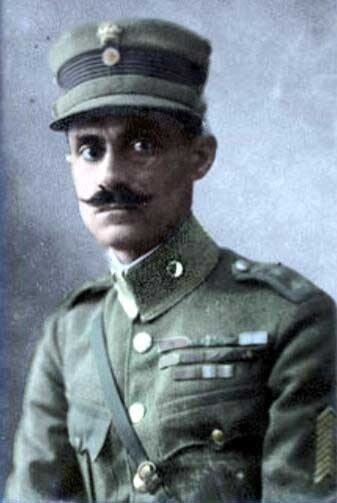
Nikolaos Plastiras
Nikolaos Plastiras was a soldier and Prime Minister of Greece. Born November 4, 1883, in Morfovoúni. Died July 26, 1953, in Athens. Positions held include Prime Minister of Greece (2 times) (1945–1952), member of the Hellenic Parliament and Minister for Foreign Affairs of Greece (1950).
Facts
13 facts · 2 confirmed by two sources · 3 cited · 8 from one source
Where this comes from
Papalocal keeps its own record. It started from these sources; what each one said is kept here as it was copied, so a change on their side never changes this page by itself. Tap one to read its version.
What Wikidata says · copied November 17, 2026 · revision 2562773331
- Described as
- soldier and Prime Minister of Greece (1883–1953)
- Born
- November 4, 1883 · 2 references
- Died
- July 26, 1953 · 3 references
- Born in
- Morfovoúni
- Died in
- Athens · 2 references
- Citizen of
- Greece
- Occupation
- politician · 1 reference; military personnel
- Positions held
- Prime Minister of Greece (2 times) (1945–1952); member of the Hellenic Parliament; Minister for Foreign Affairs of Greece (1950)
- Political party
- National Progressive Center Union
- Military rank
- lieutenant general; general · 1 reference
- Wikipedias with a page
- 27
Wikidata item Q449445 (wikidata.org/wiki/Q449445), public domain (CC0). Copied November 17, 2026.
What Wikipedia says · copied November 17, 2026 · revision 1380943490
Nikolaos Plastiras (Greek: Νικόλαος Πλαστήρας; 4 November 1883 – 26 July 1953) was a Greek general and politician, who served three times as Prime Minister of Greece. A distinguished soldier known for his personal bravery, he became famous as "The Black Rider" during the Greco-Turkish War of 1919–1922, where he commanded the 5/42 Evzone Regiment. Due to his fame, he retained his position despite the military reshuffle that commenced after the 1920 elections. After the Greek defeat in the war, along with other Venizelist officers he launched the 11 September 1922 Revolution that deposed King Constantine I of Greece and his government. The military-led government ruled until January 1924, when power was handed over to an elected National Assembly, which later declared the Second Hellenic Republic. In the interwar period, Plastiras remained a devoted Venizelist and republican. Trying to avert the rise of the royalist People's Party and the restoration of the monarchy, he led two coup attempts in 1933 and 1935, both of which failed, hastening the collapse of the Second Republic and forcing Plastiras to exile in France.
During the Axis Occupation of Greece in the Second World War he was the nominal leader of the EDES resistance group, although he remained in exile in Marseille. His stance and opinions on the occupation remain a matter of scholarly debate. After the occupation, he returned to Greece, founding the National Progressive Centre Union (EPEK) and serving as a centrist Prime Minister three times, often in coalition with the Liberal Party. In his last two governments, he tried to heal the rift caused in Greek society by the Greek Civil War, but was unsuccessful. He championed land resettlement and wealth redistribution policies, along with the extension of voting rights to women, the release of political prisoners and abolition of the death penalty, despite his own anti-communist beliefs. The EPEK-Liberal coalition's defeat in the 1952 elections to Greek Rally began a three-decade dominance of the political right in Greek politics. Plastiras died in poverty in July 1953 and was accorded a state funeral.
- Born, in its opening lines
- November 4, 1883
- Died, in its opening lines
- July 26, 1953
From the Wikipedia article “Nikolaos Plastiras” (en.wikipedia.org/wiki/Nikolaos_Plastiras), by its contributors, under CC BY-SA 4.0 (creativecommons.org/licenses/by-sa/4.0/). Copied November 17, 2026; not changed.
Confirmed Two sources agree. Cited One source, and it names where it got it. One source One source, without a reference of its own. Sources disagree The sources disagree. We show the best-supported value and keep theirs below.
