
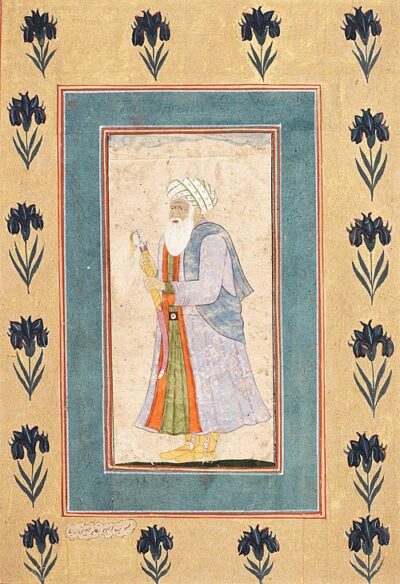
Nizamuddin Auliya
Nizamuddin Auliya was an One of the most prominent Indian Sufi Saint, lived most of his life around Delhi. Spiritual guide to Amir Khusrau. Born 1238, in Budaun. Died April 3, 1325, in Delhi.
Facts
8 facts · 2 confirmed by two sources · 1 cited · 5 from one source
Where this comes from
Papalocal keeps its own record. It started from these sources; what each one said is kept here as it was copied, so a change on their side never changes this page by itself. Tap one to read its version.
What Wikidata says · copied November 17, 2026 · revision 2559077819
- Described as
- One of the most prominent Indian Sufi Saint, lived most of his life around Delhi. Spiritual guide to Amir Khusrau
- Other names
- Nizameddin Evliya, Niẓām al-Dīn Awliyāʾ, Nizam-ud-din Auliya, Hazrat Nizamuddin Auliya, Sultan-ul-Mashaikh, Syed Muhammad Nizamuddin Auliya, Mahbub-e-Ilahi, Hazrat Nizamuddin, Khwaja Nizamuddin Auliya, Khwaja Nizamuddin
- Born
- 1238
- Died
- April 3, 1325
- Born in
- Budaun
- Died in
- Delhi · 1 reference
- Buried in
- Hazrat Nizamuddin Dargah
- Citizen of
- Delhi Sultanate · 1 reference
- Occupation
- poet
- Religion
- Islam
- Wikipedias with a page
- 26
Wikidata item Q2427934 (wikidata.org/wiki/Q2427934), public domain (CC0). Copied November 17, 2026.
What Wikipedia says · copied November 17, 2026 · revision 1372782757
Khawaja Syed Muhammad b. Ahmad Ali al-Badaoni al-Bukhari, popularly called Nizamuddin Auliya (sometimes spelled Awliya; 1238 – 3 April 1325), also known as Hazrat Nizamuddin (lit. 'Holy Nizamuddin'), Sultan-ul-Mashaikh (lit. 'Leader of the pious') and Mahbub-e-Ilahi (lit. 'Beloved of God'), was an Indian Sunni Muslim scholar, Sufi saint of the Chishti Order, and is one of the most famous Sufis from the Indian subcontinent. His predecessors were Fariduddin Ganjshakar, Qutbuddin Bakhtiyar Kaki, and Moinuddin Chishti, who were the masters of the Chishti spiritual chain or silsila in the Indian subcontinent.
Nizamuddin Auliya, like his predecessors, stressed love as a means of realising God. For him his love of God implied a love of humanity. His vision of the world was marked by a highly evolved sense of religious pluralism and kindness. It is claimed by the 14th century historiographer Ziauddin Barani that his influence on the Muslims of Delhi was such that a paradigm shift was effected in their outlook towards worldly matters. People began to be inclined towards mysticism and prayers and remaining aloof from the world. It is also believed that Ghiyasuddin Tughlaq, the founder of Tughluq dynasty, interacted with Nizamuddin. Initially, they used to share good relationship but soon this got embittered and relation between Ghiyas-ud-din Tughluq and Nizamuddin Auliya never been reformed due to opinion disharmony and their antagonism resulted regular disputes between them during that era.
- Born, in its opening lines
- 1238
- Died, in its opening lines
- April 3, 1325
From the Wikipedia article “Nizamuddin Auliya” (en.wikipedia.org/wiki/Nizamuddin_Auliya), by its contributors, under CC BY-SA 4.0 (creativecommons.org/licenses/by-sa/4.0/). Copied November 17, 2026; not changed.
Confirmed Two sources agree. Cited One source, and it names where it got it. One source One source, without a reference of its own. Sources disagree The sources disagree. We show the best-supported value and keep theirs below.
