
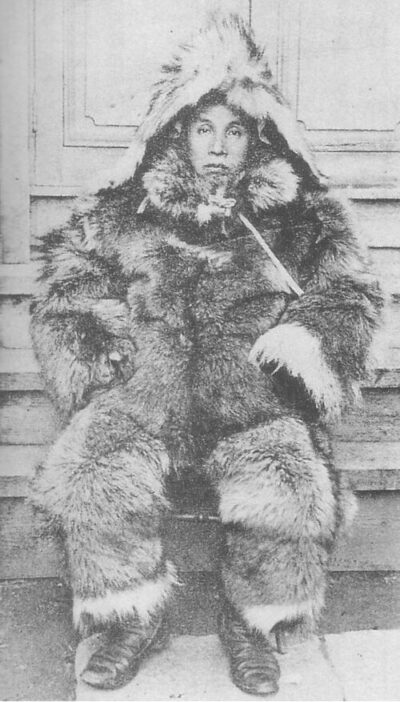
Nobu Shirase
Nobu Shirase was a Japanese explorer of the Antarctic. Born July 20, 1861, in Konoura. Died September 4, 1946, in Toyota.
Facts
11 facts · 1 confirmed by two sources · 1 cited · 8 from one source · 1 where the sources disagree
What’s different
- Born: we show July 20, 1861 (Sources disagree). Wikipedia says June 13, 1861
Where this comes from
Papalocal keeps its own record. It started from these sources; what each one said is kept here as it was copied, so a change on their side never changes this page by itself. Tap one to read its version.
What Wikidata says · copied November 17, 2026 · revision 2495471794
- Described as
- Japanese explorer of the Antarctic (1861-1946)
- Other names
- Shirase Nobu
- Born
- July 20, 1861
- Died
- September 4, 1946
- Born in
- Konoura
- Died in
- Toyota
- Citizen of
- Japan
- Occupation
- explorer; military personnel; non-fiction writer; soldier · 1 reference
- Military branch
- Imperial Japanese Army
- Military rank
- general
- Wikipedias with a page
- 25
Wikidata item Q715832 (wikidata.org/wiki/Q715832), public domain (CC0). Copied November 17, 2026.
What Wikipedia says · copied November 17, 2026 · revision 1385098340
Nobu Shirase (白瀬 矗, Shirase Nobu; 13 June 1861 – 4 September 1946) was a Japanese army officer and explorer. He led the first Japanese Antarctic Expedition, 1910–12, which reached a southern latitude of 80°5′, and made the first landing on the coast of King Edward VII Land.
Shirase had harboured polar ambitions since boyhood. By way of preparation, during his military service he participated in an expedition to the northern Kuril Islands. This venture was poorly organised and ended badly, but nonetheless provided him with useful training for future polar exploration. His longstanding intention was to lead an expedition to the North Pole, but when this mark was claimed by Robert Peary in 1909, Shirase switched his attention to the south.
Unable to attract government support for his Antarctic venture, Shirase raised the finance privately. In its first season, 1910–11, the expedition failed to make a landing, and was forced to winter in Australia. Its second attempt, in 1911–12, was more successful. Although the expedition's achievements were modest, it demonstrated that the Japanese were competent Antarctic travellers, and Shirase returned to Japan in June 1912 to much local acclaim, although the rest of the world showed little interest in his exploits. Even in Japan his fame was short-lived, and Shirase soon found himself faced with a burden of expedition debt that took him most of the rest of his life to redeem. He died in relative poverty in 1946.
Long after Shirase's death, there was belated recognition in Japan of his pioneering endeavours. Several geographical features in Antarctica were named after him or his expedition; the revived Japanese Antarctic Research Expedition named its third and fourth ice-breaking vessels Shirase; his home city of Nikaho erected a statue in 1981, and in 1990 opened a museum dedicated to his memory and the work of his expedition.
- Born, in its opening lines
- June 13, 1861
- Died, in its opening lines
- September 4, 1946
From the Wikipedia article “Nobu Shirase” (en.wikipedia.org/wiki/Nobu_Shirase), by its contributors, under CC BY-SA 4.0 (creativecommons.org/licenses/by-sa/4.0/). Copied November 17, 2026; not changed.
Confirmed Two sources agree. Cited One source, and it names where it got it. One source One source, without a reference of its own. Sources disagree The sources disagree. We show the best-supported value and keep theirs below.
