
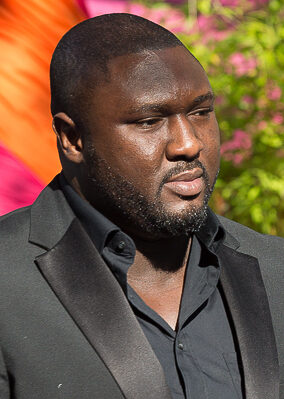
Nonso Anozie is a British actor. Born November 17, 1978, in Lincoln. Educated at Royal Central School of Speech and Drama and St Aloysius RC College. Awards include Ian Charleson Awards.
Facts
11 facts · 1 confirmed by two sources · 3 cited · 7 from one source
What’s different
- Born: we show November 17, 1978 (Confirmed). Wikidata also lists May 28, 1979
Where this comes from
Papalocal keeps its own record. It started from these sources; what each one said is kept here as it was copied, so a change on their side never changes this page by itself. Tap one to read its version.
What Wikidata says · copied November 18, 2026 · revision 2567583672
- Described as
- British actor
- Born
- November 17, 1978; May 28, 1979 · 2 references
- Born in
- Lincoln · 1 reference
- Citizen of
- United Kingdom
- Occupation
- actor · 1 reference; stage actor; film actor; television actor
- Education
- Royal Central School of Speech and Drama · 1 reference; St Aloysius RC College; College of North West London
- Awards
- Ian Charleson Awards
- Wikipedias with a page
- 22
Wikidata item Q264751 (wikidata.org/wiki/Q264751), public domain (CC0). Copied November 18, 2026.
What Wikipedia says · copied November 18, 2026 · revision 1379314970
Nonso Anozie ( ; born 17 November 1978) is an English actor. On television, he is known for his roles as Xaro Xhoan Daxos in the HBO series Game of Thrones (2012), R.M. Renfield on the Sky series Dracula (2013), Abraham Kenyatta on the CBS series Zoo (2015–2017), and Tommy Jepperd on the Netflix series Sweet Tooth (2021–2024). For the latter, he won a Children's and Family Emmy Award and was nominated for a BAFTA award.
He led the film Cass (2008). His films since include RocknRolla (2008), The Grey (2011), Ender's Game (2013), Cinderella (2015), and Guava Island (2019).
- Born, in its opening lines
- November 17, 1978
From the Wikipedia article “Nonso Anozie” (en.wikipedia.org/wiki/Nonso_Anozie), by its contributors, under CC BY-SA 4.0 (creativecommons.org/licenses/by-sa/4.0/). Copied November 18, 2026; not changed.
Confirmed Two sources agree. Cited One source, and it names where it got it. One source One source, without a reference of its own. Sources disagree The sources disagree. We show the best-supported value and keep theirs below.
