
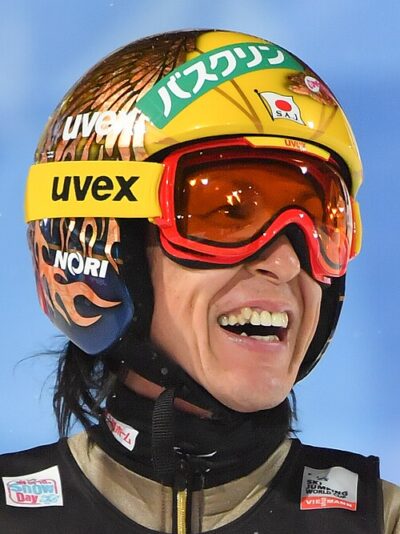
Noriaki Kasai is a Japanese ski jumper. Born June 6, 1972, in Shimokawa. Educated at Tokai University Sapporo Senior High School.
Facts
8 facts · 1 confirmed by two sources · 2 cited · 5 from one source
Where this comes from
Papalocal keeps its own record. It started from these sources; what each one said is kept here as it was copied, so a change on their side never changes this page by itself. Tap one to read its version.
What Wikidata says · copied November 16, 2026 · revision 2516764710
- Described as
- Japanese ski jumper
- Born
- June 6, 1972
- Born in
- Shimokawa
- Citizen of
- Japan
- Occupation
- ski jumper · 1 reference; alpine skier · 1 reference
- Education
- Tokai University Sapporo Senior High School
- Sport
- ski jumping · 1 reference
- Height
- 1.76 m (5 ft 9 in)
- Wikipedias with a page
- 38
Wikidata item Q343346 (wikidata.org/wiki/Q343346), public domain (CC0). Copied November 16, 2026.
What Wikipedia says · copied November 16, 2026 · revision 1383838461
Noriaki Kasai (葛西 紀明, Kasai Noriaki; born 6 June 1972) is a Japanese ski jumper. His career achievements include a gold medal at the 1992 Ski Flying World Championships, winning the 1999 Nordic Tournament, individual silver medal at the 2014 Winter Olympics, and two individual bronze medals at the 2003 Ski Jumping World Championships.
During his career, Kasai has broken numerous ski jumping records. In 2016, he was honoured with two Guinness World Records certificates for the most individual World Cup starts, not only in ski jumping, but in all World Cup disciplines organized by the International Ski Federation. At World Cup level, Kasai competed for a total of 35 seasons between 1988–89 and 2025–26.
- Born, in its opening lines
- June 6, 1972
From the Wikipedia article “Noriaki Kasai” (en.wikipedia.org/wiki/Noriaki_Kasai), by its contributors, under CC BY-SA 4.0 (creativecommons.org/licenses/by-sa/4.0/). Copied November 16, 2026; not changed.
Confirmed Two sources agree. Cited One source, and it names where it got it. One source One source, without a reference of its own. Sources disagree The sources disagree. We show the best-supported value and keep theirs below.
