
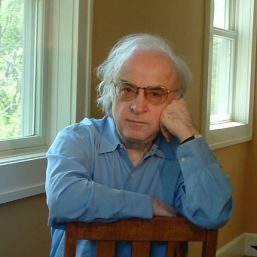
Norman Manea
Norman Manea is a Romanian writer. Born July 19, 1936, in Burdujeni. Educated at Technical University of Civil Engineering of Bucharest. Awards include Commandeur des Arts et des Lettres, Guggenheim Fellowship and MacArthur Fellows Program.
Facts
26 facts · 1 confirmed by two sources · 10 cited · 15 from one source
Where this comes from
Papalocal keeps its own record. It started from these sources; what each one said is kept here as it was copied, so a change on their side never changes this page by itself. Tap one to read its version.
What Wikidata says · copied November 16, 2026 · revision 2568841913
- Described as
- Romanian writer
- Born
- July 19, 1936 · 5 references
- Born in
- Burdujeni
- Citizen of
- Romania; United States · 1 reference
- Occupation
- writer · 2 references; university teacher; engineer · 1 reference; novelist; short story writer
- Worked for
- Bard College · 1 reference
- Education
- Technical University of Civil Engineering of Bucharest
- Member of
- Academy of Arts, Berlin; Royal Society of Literature
- Genre
- essay
- Awards
- Commandeur des Arts et des Lettres; Guggenheim Fellowship (1992) · 1 reference; MacArthur Fellows Program (1992) · 1 reference; Prix Médicis étranger (2006); Order of Cultural Merit; Nelly Sachs Prize (2011); FIL Award (2016) · 1 reference; International Nonino Prize (2002); Fellow of the Royal Society of Literature (2011) · 1 reference; Berlin Prize (2005) · 1 reference; Fulbright Scholarship; Francine and Antoine Bernheim Award for Arts, Literature and Science (2009) · 1 reference
- Wikipedias with a page
- 23
Wikidata item Q702268 (wikidata.org/wiki/Q702268), public domain (CC0). Copied November 16, 2026.
What Wikipedia says · copied November 16, 2026 · revision 1372160449
Norman Manea (Romanian pronunciation: [ˈnorman ˈmane̯a]; born 19 July 1936) is a Romanian writer and author of short fiction, novels, and essays about the Holocaust, daily life in a communist state, and exile. He lives in the United States, where he is a Professor and writer in residence at Bard College.
He left Romania in 1986 with a DAAD-Berlin Grant and in 1988 went to the US with a Fulbright Scholarship at the Catholic University in Washington DC. He won the 2002 International Nonino Prize in Italy.
Manea's most acclaimed book, The Hooligan's Return (2003), is an original fictionalized memoir, encompassing a period of almost 80 years, from the pre-war period, through the Second World War, the communist and post-communist years to the present.
In an article in The Israel Jorunal of Foreign Affairs Swiss historian Simon Geissbühler, a leading authority on the Holocaust in Romania wrote:
“Manea’s literary strategy is one of irony, ambiguity, and coded critique—a form of intellectual resistance designed to evade the surveillance of the regime while preserving the autonomy of the individual voice. His literary representation of the Holocaust is also more structured and distanced than poetic, both in substance and in language. This is both a function of style—some of Manea's most penetrating works are his essays and his autobiography—and of the fact that the writer was so young when he was deported that the experience itself was too fragmentary to be the main source of his literary work. This distance is not emotional indifference, but rather a product of belatedness and fragmentary memory.”
Manea has been known and praised as an internationally important writer since the early 1990s, and his works have been translated into more than 20 languages. He has received more than 20 awards and honours.
- Born, in its opening lines
- July 19, 1936
From the Wikipedia article “Norman Manea” (en.wikipedia.org/wiki/Norman_Manea), by its contributors, under CC BY-SA 4.0 (creativecommons.org/licenses/by-sa/4.0/). Copied November 16, 2026; not changed.
Confirmed Two sources agree. Cited One source, and it names where it got it. One source One source, without a reference of its own. Sources disagree The sources disagree. We show the best-supported value and keep theirs below.
