
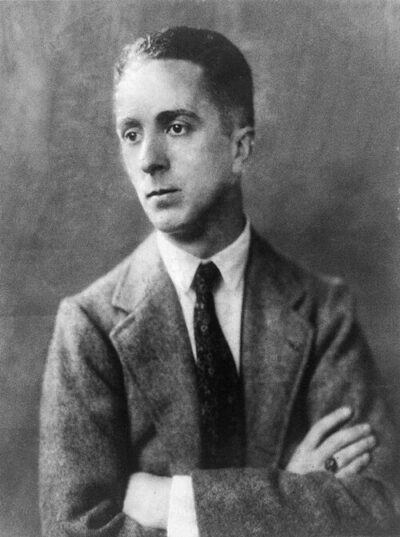
Norman Rockwell
Norman Rockwell was an American painter and illustrator. Born February 3, 1894, in New York City. Died November 8, 1978, in Stockbridge. Known for Freedom from Want, Freedom of Speech and Freedom of Worship. Educated at Parsons School of Design and Art Students League of New York. Awards include Presidential Medal of Freedom and Member of the National Academy of Design.

Facts
36 facts · 2 confirmed by two sources · 17 cited · 17 from one source
Where this comes from
Papalocal keeps its own record. It started from these sources; what each one said is kept here as it was copied, so a change on their side never changes this page by itself. Tap one to read its version.
What Wikidata says · copied November 13, 2026 · revision 2566153516
- Described as
- American painter and illustrator (1894–1978)
- Other names
- Norman Perceval Rockwell, Rockwell, Normann Rockwell, Norman Percevel Rockwell
- Born
- February 3, 1894 · 14 references
- Died
- November 8, 1978 · 13 references
- Born in
- New York City · 4 references
- Died in
- Stockbridge · 3 references
- Buried in
- Stockbridge Cemetery
- Cause of death
- pulmonary emphysema
- Citizen of
- United States
- Occupation
- painter · 1 reference; illustrator · 2 references; photographer · 3 references
- Worked for
- United States Office of War Information · 1 reference
- Education
- Parsons School of Design; Art Students League of New York; Mamaroneck High School; Grand Central School of Art
- Genre
- figurative art · 1 reference; genre art · 1 reference
- Known for
- Freedom from Want; Freedom of Speech; Freedom of Worship; Freedom from Fear; Four Freedoms · 1 reference; Rosie the Riveter
- Awards
- Presidential Medal of Freedom (1977) · 1 reference; Member of the National Academy of Design
- Field
- painting
- Spouse
- Molly Punderson; Mary Leete Punderson · 1 reference; Mary Rhodes Barstow · 1 reference; Irene O'Connor · 1 reference
- Children
- Jarvis Rockwell; Thomas Rockwell · 1 reference
- Father
- Jarvis Waring Rockwell · 1 reference
- Mother
- Anne Mary Hill Rockwell · 1 reference
- Siblings
- Jarvis Waring Rockwell Jr. · 1 reference
- Military branch
- United States Navy
- Wikipedias with a page
- 53
Wikidata item Q271884 (wikidata.org/wiki/Q271884), public domain (CC0). Copied November 13, 2026.
What Wikipedia says · copied November 13, 2026 · revision 1385256691
Norman Percevel Rockwell (February 3, 1894 – November 8, 1978) was an American painter and illustrator. His works have a broad popular appeal in the United States for their reflection of the country's culture. Rockwell is most famous for the cover illustrations of everyday life he created for The Saturday Evening Post magazine over nearly five decades. Among the best-known of Rockwell's works are the Willie Gillis series, Rosie the Riveter, the Four Freedoms series, Saying Grace, and The Problem We All Live With. He is also noted for his 64-year relationship with the Boy Scouts of America (BSA), during which he produced covers for their publication Boys' Life (now Scout Life), calendars, and other illustrations. These works include popular images that reflect the Scout Oath and Scout Law such as The Scoutmaster, A Scout Is Reverent, and A Guiding Hand.
Rockwell was a prolific artist, producing more than 4,000 original works in his lifetime. Most of his surviving works are in public collections. Rockwell was also commissioned to illustrate more than 40 books, including Tom Sawyer and Huckleberry Finn and to paint portraits of presidents Eisenhower, Kennedy, Johnson, and Nixon, as well as those of foreign figures, including Gamal Abdel Nasser and Jawaharlal Nehru. His portrait subjects also included Judy Garland. One of his last portraits was of Colonel Sanders in 1973. His annual contributions for the Boy Scouts calendars between 1925 and 1976 were only slightly overshadowed by his most popular of calendar works: the "Four Seasons" illustrations for Brown & Bigelow that were published for 17 years beginning in 1947 and reproduced in various styles and sizes since 1964. He created artwork for advertisements for Coca-Cola, Jell-O, General Motors, Scott Tissue, and other companies. Illustrations for booklets, catalogs, posters (particularly movie promotions), sheet music, stamps, playing cards, and murals (including "Yankee Doodle Dandy" and "God Bless the Hills", which was completed in 1936 for the Nassau Inn in Princeton, New Jersey) rounded out Rockwell's oeuvre as an illustrator.
Rockwell's work was dismissed by serious art critics in his lifetime. Many of his works appear overly sweet in the opinion of modern critics, especially The Saturday Evening Post covers, which tend toward idealistic or sentimentalized portrayals of American life. This has led to the often deprecatory adjective "Rockwellesque". Consequently, Rockwell is not considered a "serious painter" by some contemporary artists, who regard his work as bourgeois and kitsch. He is called an "illustrator" instead of an artist by some critics, a designation he did not mind, as that was what he called himself.
In his later years, Rockwell began receiving more attention as a painter when he chose more serious subjects such as the series on racism for Look magazine. One example of this more serious work is The Problem We All Live With, which dealt with the issue of school racial integration. The painting depicts Ruby Bridges, flanked by white federal marshals, walking to school past a wall defaced by racist graffiti. This 1964 painting was displayed in the White House when Bridges met with President Barack Obama in 2011.
- Born, in its opening lines
- February 3, 1894
- Died, in its opening lines
- November 8, 1978
From the Wikipedia article “Norman Rockwell” (en.wikipedia.org/wiki/Norman_Rockwell), by its contributors, under CC BY-SA 4.0 (creativecommons.org/licenses/by-sa/4.0/). Copied November 13, 2026; not changed.
Confirmed Two sources agree. Cited One source, and it names where it got it. One source One source, without a reference of its own. Sources disagree The sources disagree. We show the best-supported value and keep theirs below.
