
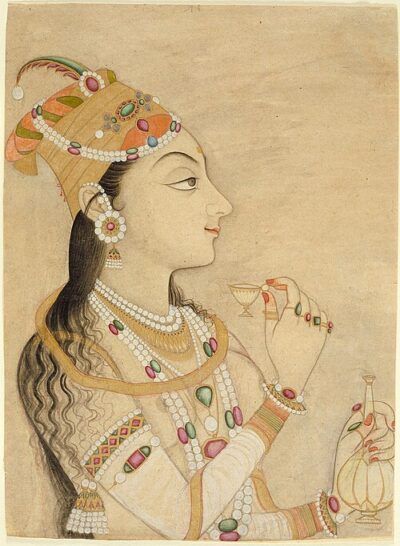
Nur Jahan
Nur Jahan was a Padshah Begum of the Mughal Empire. Born May 31, 1577, in Kandahar. Died December 19, 1645, in Lahore.
Facts
18 facts · 1 confirmed by two sources · 5 cited · 11 from one source · 1 where the sources disagree
What’s different
- Died: we show December 19, 1645 (Sources disagree). Wikipedia says December 18, 1645
Where this comes from
Papalocal keeps its own record. It started from these sources; what each one said is kept here as it was copied, so a change on their side never changes this page by itself. Tap one to read its version.
What Wikidata says · copied November 16, 2026 · revision 2568922763
- Described as
- Padshah Begum of the Mughal Empire (1577-1645)
- Other names
- Noor Jehan, Noor Janan, Bur Jehan, Mher-ul-Nissa
- Born
- May 31, 1577 · 1 reference
- Died
- December 19, 1645
- Born in
- Kandahar
- Died in
- Lahore
- Buried in
- Tomb of Nur Jahan
- Citizen of
- Mughal Empire · 1 reference
- Occupation
- poet; queen consort; Power behind the throne
- Spouse
- Sher Afghan Quli Khan (1594–1607); Jahangir I (1611–1627) · 1 reference
- Children
- Ladli Begum
- Father
- Mirza Ghiyas Beg · 1 reference
- Mother
- Asmat Begum · 1 reference
- Siblings
- Abul-Hasan ibn Mirza Ghiyas Beg · 1 reference; Ibrahim Khan Fath-i-Jang
- Religion
- Islam · 1 reference; Shia Islam · 2 references
- Wikipedias with a page
- 50
Wikidata item Q541530 (wikidata.org/wiki/Q541530), public domain (CC0). Copied November 16, 2026.
What Wikipedia says · copied November 16, 2026 · revision 1378994484
Nur Jahan (Persian: نورجهان, lit. 'Light of the World'; 31 May 1577 – 18 December 1645), born Mehr-un-Nissa, was the twentieth wife and chief consort of the Mughal emperor Jahangir.
More decisive and proactive than her husband, Nur Jahan is considered by certain historians to have been the real power behind the throne for more than a decade. Wielding a level of power and influence unprecedented for a Mughal empress, she was granted honours and privileges never enjoyed by any of her predecessors or successors, such as having coinage struck in her name. Jahangir had severe addictions to hunting, alcohol, and opium and he also had to contend with his frequent ill-health. Nur Jahan rose to power due to her intellect, political skill, and ability to forge strategic alliances in the imperial court in her husband’s negligence.
- Born, in its opening lines
- May 31, 1577
- Died, in its opening lines
- December 18, 1645
From the Wikipedia article “Nur Jahan” (en.wikipedia.org/wiki/Nur_Jahan), by its contributors, under CC BY-SA 4.0 (creativecommons.org/licenses/by-sa/4.0/). Copied November 16, 2026; not changed.
Confirmed Two sources agree. Cited One source, and it names where it got it. One source One source, without a reference of its own. Sources disagree The sources disagree. We show the best-supported value and keep theirs below.
