
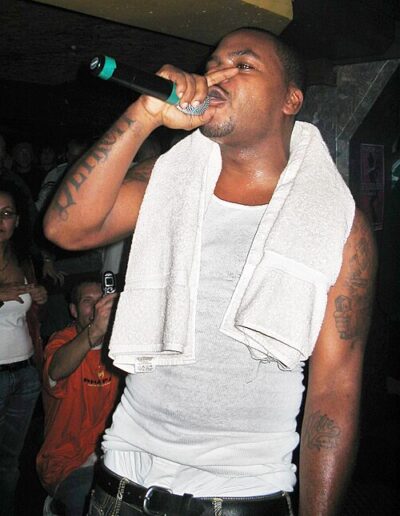
Obie Trice
Obie Trice is an American rapper. Born November 14, 1977, in Detroit. Educated at Cooley High School.
Facts
13 facts · 1 confirmed by two sources · 1 cited · 11 from one source
Where this comes from
Papalocal keeps its own record. It started from these sources; what each one said is kept here as it was copied, so a change on their side never changes this page by itself. Tap one to read its version.
What Wikidata says · copied November 15, 2026 · revision 2563757800
- Described as
- American rapper
- Other names
- Obie Trice III
- Born
- November 14, 1977 · 2 references
- Born in
- Detroit
- Name at birth
- Obie Trice III · 1 reference
- Citizen of
- United States
- Occupation
- rapper; songwriter; musician · 1 reference
- Education
- Cooley High School · 1 reference
- Genre
- hip-hop; Midwest hip-hop
- Instrument
- voice
- Record label
- Shady Records
- Website
- http://www.obietrice.com · 1 reference
- Wikipedias with a page
- 29
Wikidata item Q313146 (wikidata.org/wiki/Q313146), public domain (CC0). Copied November 15, 2026.
What Wikipedia says · copied November 15, 2026 · revision 1382295342
Obie Trice III (born November 14, 1977) is an American rapper. He began his career in 1998, and two years later, he signed with fellow Detroit rapper Eminem's Shady Records, an imprint of Interscope Records to release his first two studio albums, Cheers (2003) and Second Round's on Me (2006). Both peaked within the top ten of the Billboard 200, while the former was supported by the singles "Got Some Teeth" and the Dr. Dre–produced "The Set Up (You Don’t Know)" (featuring Nate Dogg). Upon leaving the label, Trice formed his own record label, Black Market Entertainment, to self-release his next albums: Bottoms Up (2012), The Hangover (2015) and The Fifth (2019).
- Born, in its opening lines
- November 14, 1977
From the Wikipedia article “Obie Trice” (en.wikipedia.org/wiki/Obie_Trice), by its contributors, under CC BY-SA 4.0 (creativecommons.org/licenses/by-sa/4.0/). Copied November 15, 2026; not changed.
Confirmed Two sources agree. Cited One source, and it names where it got it. One source One source, without a reference of its own. Sources disagree The sources disagree. We show the best-supported value and keep theirs below.
