
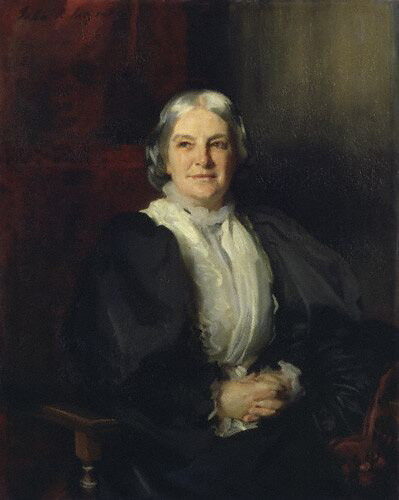
Octavia Hill
Octavia Hill was an English social reformer. Born December 3, 1838, in Wisbech. Died August 13, 1912, in Marylebone.
Facts
18 facts · 2 confirmed by two sources · 7 cited · 9 from one source
Where this comes from
Papalocal keeps its own record. It started from these sources; what each one said is kept here as it was copied, so a change on their side never changes this page by itself. Tap one to read its version.
What Wikidata says · copied November 17, 2026 · revision 2539017757
- Described as
- English social reformer (1838-1912)
- Born
- December 3, 1838 · 5 references
- Died
- August 13, 1912 · 5 references
- Born in
- Wisbech
- Died in
- Marylebone
- Buried in
- Crockham Hill
- Cause of death
- cancer
- Citizen of
- United Kingdom of Great Britain and Ireland
- Occupation
- social reformer; writer · 1 reference; teacher; politician · 1 reference
- Spouse
- Harriot Yorke
- Father
- James Hill · 1 reference
- Mother
- Caroline Southwood Hill · 1 reference
- Siblings
- Gertrude Hill · 1 reference; Miranda Hill · 1 reference; Florence Hill · 1 reference; Emily Southwood Hill · 1 reference
- Wikipedias with a page
- 25
Wikidata item Q437462 (wikidata.org/wiki/Q437462), public domain (CC0). Copied November 17, 2026.
What Wikipedia says · copied November 17, 2026 · revision 1376624286
Octavia Hill (3 December 1838 – 13 August 1912) was an English social reformer and founder of the National Trust. Her main concern was the welfare of the inhabitants of cities, especially London, in the second half of the nineteenth century. Born into a family of radical thinkers and reformers with a strong commitment to alleviating poverty, she herself grew up in straitened circumstances owing to the financial failure of her father's businesses. Home educated by her mother, she worked from the age of 14 for the welfare of working people.
Hill was a moving force behind the development of social housing, and her early friendship with John Ruskin enabled her to put her theories into practice with the aid of his initial investment. She believed in self-reliance, and made it a key part of her housing system that she and her assistants knew their tenants personally and encouraged them to better themselves. She was opposed to municipal provision of housing, believing it to be bureaucratic and impersonal.
Another of Hill's concerns was the availability of open spaces for poor people. She campaigned against development on existing suburban woodlands, and helped to save London's Hampstead Heath and Parliament Hill Fields from being built on. She was one of the three founders of the National Trust, set up to preserve places of historic interest or natural beauty for the enjoyment of the British public. She was a founder member of the Charity Organisation Society (now the charity Family Action) which organised charitable grants and pioneered a home-visiting service that formed the basis for modern social work. She was a member of the Royal Commission on the Poor Laws in 1905.
Hill's legacy includes the large holdings of the modern National Trust, several housing projects still run on her lines, a tradition of training for housing managers, and the Octavia Hill Birthplace House established by the Octavia Hill Society at her birthplace in Wisbech. She was key in pushing for the creation of what is now known as the Army Cadet Force, after seeing the success it was having in schools who maintained detachments of the Officers' Training Corps (now known as the Combined Cadet Force).
- Born, in its opening lines
- December 3, 1838
- Died, in its opening lines
- August 13, 1912
From the Wikipedia article “Octavia Hill” (en.wikipedia.org/wiki/Octavia_Hill), by its contributors, under CC BY-SA 4.0 (creativecommons.org/licenses/by-sa/4.0/). Copied November 17, 2026; not changed.
Confirmed Two sources agree. Cited One source, and it names where it got it. One source One source, without a reference of its own. Sources disagree The sources disagree. We show the best-supported value and keep theirs below.
