
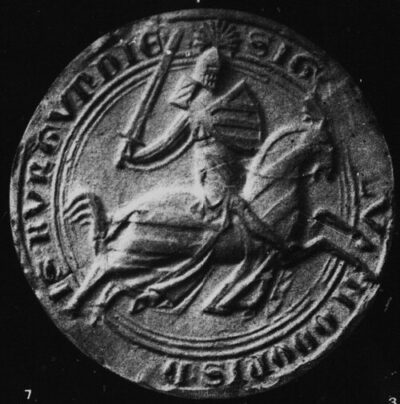
Odo IV, Duke of Burgundy
Odo IV, Duke of Burgundy was a French noble. Born 1295. Died April 3, 1350, in Sens. Positions held include Prince of Achaea.
Facts
17 facts · 1 confirmed by two sources · 7 cited · 8 from one source · 1 where the sources disagree
What’s different
- Died: we show April 3, 1350 (Sources disagree). Wikipedia says April 3, 1349
Where this comes from
Papalocal keeps its own record. It started from these sources; what each one said is kept here as it was copied, so a change on their side never changes this page by itself. Tap one to read its version.
What Wikidata says · copied November 17, 2026 · revision 2557663402
- Described as
- French noble
- Born
- 1295 · 2 references
- Died
- April 3, 1350 · 1 reference
- Died in
- Sens
- Buried in
- Cîteaux Abbey · 1 reference
- Cause of death
- plague
- Occupation
- aristocrat
- Positions held
- Prince of Achaea
- Spouse
- Joan III, Countess of Burgundy (1318–) · 2 references
- Children
- Philip of Burgundy · 1 reference
- Father
- Robert II of Burgundy · 1 reference
- Mother
- Agnes of France, Duchess of Burgundy · 1 reference
- Siblings
- Margaret of Burgundy · 1 reference; Joan of Burgundy · 1 reference; Blanche of Burgundy; Louis of Burgundy; Hugh V, Duke of Burgundy · 1 reference; Marie of Burgundy
- Wikipedias with a page
- 24
Wikidata item Q707899 (wikidata.org/wiki/Q707899), public domain (CC0). Copied November 17, 2026.
What Wikipedia says · copied November 17, 2026 · revision 1359544552
Odo IV or Eudes IV (1295 – 3 April 1349/1350) was Duke of Burgundy from 1315 until his death and Count of Burgundy and Artois between 1330 and 1347, as well as titular King of Thessalonica from 1316 to 1320. He was the second son of Duke Robert II and Agnes of France.
- Born, in its opening lines
- 1295
- Died, in its opening lines
- April 3, 1349
From the Wikipedia article “Odo IV of Burgundy” (en.wikipedia.org/wiki/Odo_IV_of_Burgundy), by its contributors, under CC BY-SA 4.0 (creativecommons.org/licenses/by-sa/4.0/). Copied November 17, 2026; not changed.
Confirmed Two sources agree. Cited One source, and it names where it got it. One source One source, without a reference of its own. Sources disagree The sources disagree. We show the best-supported value and keep theirs below.
