
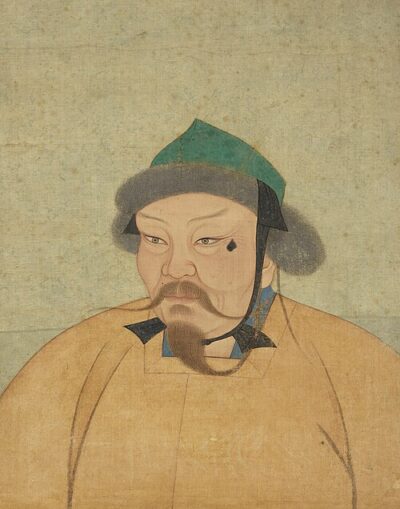
Ögedei Khan
Ögedei Khan was a Khan of the Mongol Empire (c.1186-1241) (r. 1229-1241). Born November 7, 1186, in Khamag Mongol. Died December 11, 1241, in Mongol Empire. Positions held include Khagan of the Mongol Empire (1229–1241).
Facts
34 facts · 2 confirmed by two sources · 9 cited · 22 from one source · 1 where the sources disagree
What’s different
- Name at birth: we show ᠣᠭᠡᠳᠡᠢ (Sources disagree). Wikidata also lists Өгөдэй
Where this comes from
Papalocal keeps its own record. It started from these sources; what each one said is kept here as it was copied, so a change on their side never changes this page by itself. Tap one to read its version.
What Wikidata says · copied November 16, 2026 · revision 2553389675
- Described as
- Khan of the Mongol Empire (c.1186-1241) (r. 1229-1241)
- Other names
- Ogotai, Yuán Tàizōng, Tai Zong, Wokuotai, Өгөдэй хаан, Ogedei
- Born
- November 7, 1186
- Died
- December 11, 1241
- Born in
- Khamag Mongol · 1 reference
- Died in
- Mongol Empire
- Name at birth
- ᠣᠭᠡᠳᠡᠢ; Өгөдэй
- Citizen of
- Mongol Empire
- Occupation
- khan
- Positions held
- Khagan of the Mongol Empire (1229–1241)
- Spouse
- Achin Khatun; Möge Khatun; Empress Batchimeg; Töregene Khatun; Anghui
- Children
- Güyük Khan · 1 reference; Godan Khan · 1 reference; Khochu · 2 references; Khorachar · 1 reference; Khashi · 1 reference; Kadan · 1 reference; Melik · 1 reference; Sürkhakhan · 1 reference
- Father
- Genghis Khan · 1 reference
- Mother
- Börte
- Siblings
- Chechiyegen; Alahaibieji; Tümelün; Al-Altan; Qojin; Yeli'andun; Jochi; Chagatai Khan; Wuluchi; Kölgen
- Religion
- Tengrism
- Wikipedias with a page
- 81
Wikidata item Q7519 (wikidata.org/wiki/Q7519), public domain (CC0). Copied November 16, 2026.
What Wikipedia says · copied November 16, 2026 · revision 1382028068
Ögedei Khan (also Ögedei Khagan or Ogodei; c. 1186 – 11 December 1241) was the second khan of the Mongol Empire. The third son of Genghis Khan, he continued the expansion of the empire that his father had begun.
Born in c. 1186 AD, Ögedei fought in numerous battles during his father's rise to power. After being granted a large appanage and taking a number of wives, including Töregene, he played a prominent role in the Mongol invasion of the Khwarazmian Empire. When his older brothers Jochi and Chagatai quarrelled over strategies when besieging Gurganj, Genghis appointed Ögedei sole commander; his successful capture of the city in 1221 ensured his military reputation. He was confirmed as heir after further infighting between his elder brothers led to both being excluded from succession plans. Genghis died in 1227, and Ögedei was elected as khan in 1229, after a two-year regency led by his younger brother Tolui.
As khan, Ögedei pursued the expansionist policies of his father. He launched a second invasion of Persia led by Chormaqan Noyan in 1230, which subdued the Khwarazmian prince Jalal al-Din Mangburni and began to subjugate Georgia. He initiated the Mongol invasions of Korea in 1231 and completed the Mongol conquest of the Jin dynasty in 1234, and his armies skirmished with the Song dynasty and in India. By the time of his death in 1241, large armies under the command of his nephew Batu Khan and the great general Subutai had subdued the steppes and penetrated deep into Europe. These armies defeated Poland at Legnica and Hungary at Mohi before retreating. It is likely that this retreat was caused by the need to find a successor after Ögedei's death, although some scholars have speculated that the Mongols were simply unable to invade further because of logistical difficulties.
As an administrator, Ögedei continued to develop the fast-growing Mongol state. Working with officials such as Yelü Chucai, he developed ortogh trading systems, instituted methods of tax collection, and established regional bureaucracies which controlled legal and economic affairs. He also founded the Mongol capital city, Karakorum, in the 1230s. Although historically disregarded in comparison to his father, especially on account of his alcoholism, he was known to be charismatic, good-natured, and intelligent. He was succeeded by his son Güyük.
- Born, in its opening lines
- c. 1186
- Died, in its opening lines
- December 11, 1241
From the Wikipedia article “Ögedei Khan” (en.wikipedia.org/wiki/Ögedei_Khan), by its contributors, under CC BY-SA 4.0 (creativecommons.org/licenses/by-sa/4.0/). Copied November 16, 2026; not changed.
Confirmed Two sources agree. Cited One source, and it names where it got it. One source One source, without a reference of its own. Sources disagree The sources disagree. We show the best-supported value and keep theirs below.
