
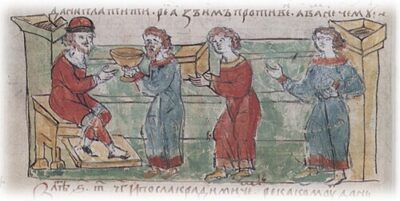
Oleg the Wise
Oleg the Wise was a prince of Kiev. Born 845. Died 912, in Kyiv. Positions held include Grand Prince of Kiev (882–912) and regent (879–912).
Facts
11 facts · 0 confirmed by two sources · 1 cited · 9 from one source · 1 where the sources disagree
What’s different
- Buried in: we show Schekavytcya (Sources disagree). Wikidata also lists Staraya Ladoga mounds
Where this comes from
Papalocal keeps its own record. It started from these sources; what each one said is kept here as it was copied, so a change on their side never changes this page by itself. Tap one to read its version.
What Wikidata says · copied November 16, 2026 · revision 2553824416
- Described as
- prince of Kiev
- Other names
- Oleh, Helge the Wise, Oleh of Kyiv, Oleh the Wise, Oleg of Kiev
- Born
- 845
- Died
- 912
- Died in
- Kyiv
- Buried in
- Schekavytcya · 1 reference; Staraya Ladoga mounds · 1 reference
- Cause of death
- snakebite
- Citizen of
- Kievan Rus'
- Occupation
- regent
- Positions held
- Grand Prince of Kiev (882–912) · 1 reference; regent (879–912)
- Siblings
- Efanda · 1 reference
- Religion
- paganism
- Wikipedias with a page
- 64
Wikidata item Q6131983 (wikidata.org/wiki/Q6131983), public domain (CC0). Copied November 16, 2026.
What Wikipedia says · copied November 16, 2026 · revision 1383734008
Oleg (Old East Slavic: Ѡлегъ, romanised: Ōlegǔ, Ольгъ, Olǐgǔ; Old Norse: Helgi; died 912), also known as Oleg the Wise, was a Varangian prince of the Rus' who became prince of Kiev, and laid the foundations of the Kievan Rus' state.
According to the Primary Chronicle, he succeeded his "kinsman" Rurik as ruler of Novgorod, and subdued many of the East Slavic tribes to his rule, extending his control from Novgorod to the south along the Dnieper river. Oleg also launched a successful attack on Constantinople. He died in 912 and was succeeded by Rurik's son, Igor.
This traditional dating has been challenged by some historians, who point out that it is inconsistent with such other sources as the Schechter Letter, which mentions the activities of a certain khagan HLGW (Hebrew: הלגו usually transcribed Helgu. Compare Swedish first name Helge.) of Rus' as late as the 940s, during the reign of Byzantine Emperor Romanus I. The nature of Oleg's relationship with the Rurikid ruling family of the Rus', and specifically with his successor Igor of Kiev, is a matter of much controversy among historians.
From the Wikipedia article “Oleg the Wise” (en.wikipedia.org/wiki/Oleg_the_Wise), by its contributors, under CC BY-SA 4.0 (creativecommons.org/licenses/by-sa/4.0/). Copied November 16, 2026; not changed.
Confirmed Two sources agree. Cited One source, and it names where it got it. One source One source, without a reference of its own. Sources disagree The sources disagree. We show the best-supported value and keep theirs below.
