
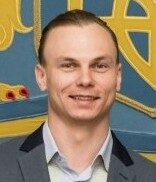
Oleksandr Abramenko is an Ukrainian freestyle skier. Born May 4, 1988, in Zlatopil. Educated at Admiral Makarov National University of Shipbuilding. Awards include Order of Merit (Ukraine), 3rd class.
Facts
9 facts · 1 confirmed by two sources · 2 cited · 6 from one source
Where this comes from
Papalocal keeps its own record. It started from these sources; what each one said is kept here as it was copied, so a change on their side never changes this page by itself. Tap one to read its version.
What Wikidata says · copied November 16, 2026 · revision 2569778310
- Described as
- Ukrainian freestyle skier
- Other names
- Oleksandr Volodymyrovych Abramenko
- Born
- May 4, 1988
- Born in
- Zlatopil
- Citizen of
- Ukraine
- Occupation
- freestyle skier · 1 reference
- Education
- Admiral Makarov National University of Shipbuilding
- Sport
- freestyle skiing · 1 reference
- Awards
- Order of Merit (Ukraine), 3rd class
- Lived in
- Mykolaiv
- Height
- 1.80 m (5 ft 11 in)
- Wikipedias with a page
- 31
Wikidata item Q11801418 (wikidata.org/wiki/Q11801418), public domain (CC0). Copied November 16, 2026.
What Wikipedia says · copied November 16, 2026 · revision 1365958830
Oleksandr Volodymyrovych Abramenko (Ukrainian: Олександр Володимирович Абраменко; born 4 May 1988) is a Ukrainian Olympic gold medalist freestyle skier, specializing in aerials. He is the 2015–16 Aerials World Cup winner. He competed at the 2006, 2010, 2014, 2018, and 2022 Winter Olympics, winning the Olympic gold medal in the men's aerials event at Pyeongchang. Abramenko is also 2019 World Championships and 2022 Winter Olympics silver medalist.
- Born, in its opening lines
- May 4, 1988
From the Wikipedia article “Oleksandr Abramenko” (en.wikipedia.org/wiki/Oleksandr_Abramenko), by its contributors, under CC BY-SA 4.0 (creativecommons.org/licenses/by-sa/4.0/). Copied November 16, 2026; not changed.
Confirmed Two sources agree. Cited One source, and it names where it got it. One source One source, without a reference of its own. Sources disagree The sources disagree. We show the best-supported value and keep theirs below.
