
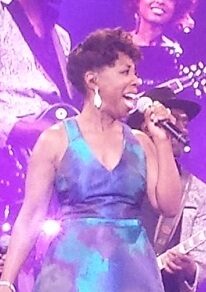
Oleta Adams is an American singer. Born May 4, 1953, in Seattle. Educated at A.C. Davis High School. Awards include Kansas Music Hall of Fame.
Facts
16 facts · 1 confirmed by two sources · 5 cited · 10 from one source
Where this comes from
Papalocal keeps its own record. It started from these sources; what each one said is kept here as it was copied, so a change on their side never changes this page by itself. Tap one to read its version.
What Wikidata says · copied November 18, 2026 · revision 2563861017
- Described as
- American singer
- Other names
- Oleta Angela Adams
- Born
- May 4, 1953 · 1 reference
- Born in
- Seattle
- Citizen of
- United States
- Occupation
- singer; pianist; jazz musician; musician · 1 reference
- Education
- A.C. Davis High School · 1 reference
- Genre
- soul; jazz · 1 reference
- Instrument
- piano · 1 reference; voice · 1 reference
- Record label
- MNRK Music Group; Fontana Records
- Awards
- Kansas Music Hall of Fame (2010) · 1 reference
- Website
- https://www.oletaadams.com/
- Wikipedias with a page
- 16
Wikidata item Q434724 (wikidata.org/wiki/Q434724), public domain (CC0). Copied November 18, 2026.
What Wikipedia says · copied November 18, 2026 · revision 1381568016
Oleta Angela Adams (born May 4, 1953) is an American singer, pianist, and songwriter. She found limited success during the early 1980s, before gaining fame via her contributions to Tears for Fears' international chart-topping album The Seeds of Love (1989). Her albums Circle of One (1991) and Evolution (1993) were top 10 hits in the UK; the former yielded a Grammy-nominated cover of Brenda Russell's "Get Here", which was a top 5 hit in both the UK and the U.S. Adams has been nominated for four Grammy Awards, as well as two Soul Train Music Awards.
- Born, in its opening lines
- May 4, 1953
From the Wikipedia article “Oleta Adams” (en.wikipedia.org/wiki/Oleta_Adams), by its contributors, under CC BY-SA 4.0 (creativecommons.org/licenses/by-sa/4.0/). Copied November 18, 2026; not changed.
Confirmed Two sources agree. Cited One source, and it names where it got it. One source One source, without a reference of its own. Sources disagree The sources disagree. We show the best-supported value and keep theirs below.
