
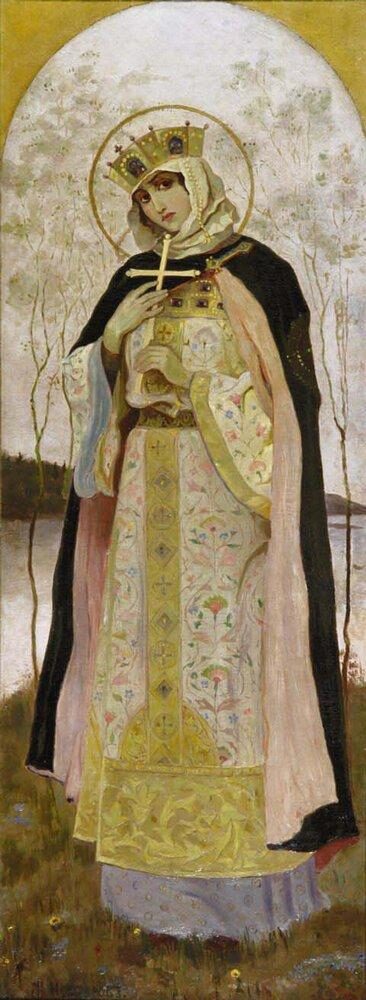
Olga of Kiev
Olga of Kiev was a princess of Kiev, Orthodox saint (c. 890–925). Born 890, in Pskov. Died July 11, 969, in Kyiv. Positions held include regent (945–960).
Facts
13 facts · 0 confirmed by two sources · 3 cited · 10 from one source
Where this comes from
Papalocal keeps its own record. It started from these sources; what each one said is kept here as it was copied, so a change on their side never changes this page by itself. Tap one to read its version.
What Wikidata says · copied November 16, 2026 · revision 2553824418
- Described as
- princess of Kiev, Orthodox saint (c. 890–925)
- Born
- 890 · 1 reference
- Died
- July 11, 969 · 3 references
- Born in
- Pskov
- Died in
- Kyiv
- Buried in
- Church of the Tithes
- Occupation
- regent; knyaginya
- Positions held
- regent (945–960)
- Spouse
- Igor of Kiev (903–945) · 5 references
- Children
- Sviatoslav I of Kiev · 1 reference; Uleb Igorevich · 1 reference
- Religion
- Slavic religion (–957); Christianity (957–)
- Wikipedias with a page
- 63
Wikidata item Q193198 (wikidata.org/wiki/Q193198), public domain (CC0). Copied November 16, 2026.
What Wikipedia says · copied November 16, 2026 · revision 1384780078
Olga (Church Slavonic: Ольга; Old Norse: Helga; c. 890–925 – 11 July 969) was a regent of Kievan Rus' for her son Sviatoslav from 945 until 957. Following her baptism, Olga took the name Elenа. She is known for her subjugation of the Drevlians, a tribe that had killed her husband Igor. Even though it was her grandson Vladimir who adopted Christianity and made it the state religion, she was the first Rurikid ruler to be baptized.
Olga is venerated as a saint in the Eastern Orthodox Church with the epithet "Equal to the Apostles". Her feast day is 11 July.
From the Wikipedia article “Olga of Kiev” (en.wikipedia.org/wiki/Olga_of_Kiev), by its contributors, under CC BY-SA 4.0 (creativecommons.org/licenses/by-sa/4.0/). Copied November 16, 2026; not changed.
Confirmed Two sources agree. Cited One source, and it names where it got it. One source One source, without a reference of its own. Sources disagree The sources disagree. We show the best-supported value and keep theirs below.
