
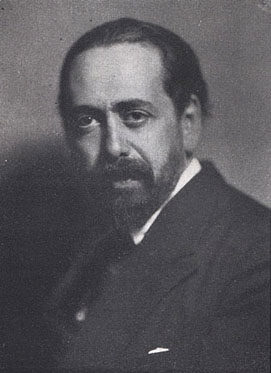
Oliverio Girondo
Oliverio Girondo was an Argentinian poet and writer. Born August 17, 1891, in Buenos Aires. Died January 24, 1967, in Buenos Aires. Educated at Instituto Libre de Segunda Enseñanza.
Facts
11 facts · 2 confirmed by two sources · 6 cited · 3 from one source
Where this comes from
Papalocal keeps its own record. It started from these sources; what each one said is kept here as it was copied, so a change on their side never changes this page by itself. Tap one to read its version.
What Wikidata says · copied November 18, 2026 · revision 2567355829
- Described as
- Argentinian poet and writer (1891–1967)
- Other names
- Oliveiro Girondo
- Born
- August 17, 1891 · 5 references
- Died
- January 24, 1967 · 8 references
- Born in
- Buenos Aires · 1 reference
- Died in
- Buenos Aires · 1 reference
- Buried in
- Recoleta Cemetery · 1 reference
- Citizen of
- Argentina · 1 reference
- Occupation
- journalist; writer · 1 reference; poet · 1 reference
- Education
- Instituto Libre de Segunda Enseñanza
- Spouse
- Norah Lange (1933–1967)
- Wikipedias with a page
- 20
Wikidata item Q1728777 (wikidata.org/wiki/Q1728777), public domain (CC0). Copied November 18, 2026.
What Wikipedia says · copied November 18, 2026 · revision 1370465250
Oliverio Girondo (August 17, 1891 – January 24, 1967) was an Argentine poet. He was born in Buenos Aires to a relatively wealthy family, enabling him from a young age to travel to Europe, where he studied in both Paris and England. During the 1920s, he was involved with the avant-garde journal Martín Fierro, which ushered in the arrival of ultraism, the first of the vanguardist movements to settle in Argentina.
His first poems, full of color and irony, surpass the simple admiration of beauty in nature which was then a common theme, opting instead for a fuller and more interesting topic: a sort of celebration of living cosmopolitan and urbane, both praising such a lifestyle and criticizing some of the customs of its society.
Girondo was contemporary to Jorge Luis Borges, Raúl González Tuñón and Macedonio Fernández and Norah Lange (whom he married in 1943) whom he met at a lunch banquet in 1926 held in honor of Ricardo Güiraldes. Of these authors, all also involved in the vanguardia (avant gardism) of Argentina, most identified with the Florida group in the somewhat farcical literary hostility between that group and another called Grupo Boedo. Girondo was one of the most enthusiastic animators of the ultraist movement, exerting influence over many poets of the next generation, among them Enrique Molina with whom he translated the work of Arthur Rimbaud “Una temporada en el infierno.”
Other notable peers include Pablo Neruda and Federico García Lorca with whom he began lasting friendships in 1934, era when both were to be found in Buenos Aires, capital city of Argentina. Around the year 1950 he began painting in the style of surrealism, but he never published or sold any of these works.
He was buried in La Recoleta Cemetery in Buenos Aires.
- Born, in its opening lines
- August 17, 1891
- Died, in its opening lines
- January 24, 1967
From the Wikipedia article “Oliverio Girondo” (en.wikipedia.org/wiki/Oliverio_Girondo), by its contributors, under CC BY-SA 4.0 (creativecommons.org/licenses/by-sa/4.0/). Copied November 18, 2026; not changed.
Confirmed Two sources agree. Cited One source, and it names where it got it. One source One source, without a reference of its own. Sources disagree The sources disagree. We show the best-supported value and keep theirs below.
