
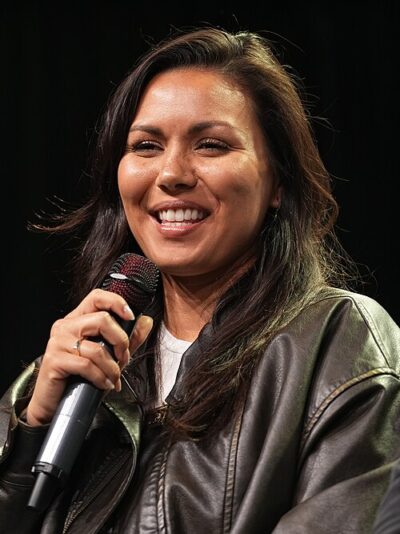
Olivia Olson
Olivia Olson is an American actress and singer. Born May 21, 1992, in Los Angeles. Educated at Agoura High School.
Facts
17 facts · 1 confirmed by two sources · 3 cited · 13 from one source
Where this comes from
Papalocal keeps its own record. It started from these sources; what each one said is kept here as it was copied, so a change on their side never changes this page by itself. Tap one to read its version.
What Wikidata says · copied November 15, 2026 · revision 2567304049
- Described as
- American actress and singer
- Other names
- Olivia Rose Olson
- Born
- May 21, 1992 · 2 references
- Born in
- Los Angeles · 1 reference
- Citizen of
- United States
- Occupation
- actor · 2 references; singer-songwriter; television actor; film actor; singer · 1 reference; composer; voice actor; recording artist
- Education
- Agoura High School
- Genre
- acoustic music
- Instrument
- piano; voice
- Field
- music composing
- Father
- Martin Olson
- Wikipedias with a page
- 30
Wikidata item Q260331 (wikidata.org/wiki/Q260331), public domain (CC0). Copied November 15, 2026.
What Wikipedia says · copied November 15, 2026 · revision 1383342207
Olivia Olson (born May 21, 1992) is an American actress, singer-songwriter, and screenwriter, largely known for her voice roles as Vanessa Doofenshmirtz in Phineas and Ferb and Marceline the Vampire Queen in Adventure Time. She also played the character of Joanna in the 2003 film Love Actually and its 2017 short sequel Red Nose Day Actually.
Along with this, she is also a writer, having written the Boom! Studios graphic novel Marcy and Simon, co-authored Adventure Time: The Enchiridion and Marcy's Super-Secret Scrapbook, and contributed writing to the best-seller Adventure Time Encyclopedia for Cartoon Network. In 2023, she began writing for the Phineas and Ferb revival.
- Born, in its opening lines
- May 21, 1992
From the Wikipedia article “Olivia Olson” (en.wikipedia.org/wiki/Olivia_Olson), by its contributors, under CC BY-SA 4.0 (creativecommons.org/licenses/by-sa/4.0/). Copied November 15, 2026; not changed.
Confirmed Two sources agree. Cited One source, and it names where it got it. One source One source, without a reference of its own. Sources disagree The sources disagree. We show the best-supported value and keep theirs below.
