
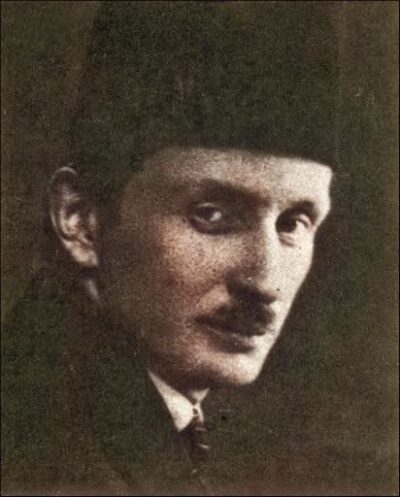
Ömer Seyfettin
Ömer Seyfettin was an Ottoman writer, teacher and soldier. Born March 11, 1884, in Gönen. Died March 6, 1920, in Istanbul. Known for Mr. Efruz and Lonely Efe. Educated at Kuleli Military High School and Turkish Military Academy.
Facts
16 facts · 2 confirmed by two sources · 6 cited · 8 from one source
Where this comes from
Papalocal keeps its own record. It started from these sources; what each one said is kept here as it was copied, so a change on their side never changes this page by itself. Tap one to read its version.
What Wikidata says · copied November 18, 2026 · revision 2567409262
- Described as
- Ottoman writer, teacher and soldier (1884–1920)
- Other names
- Omer Seyfettin, Omer Seyfeddin, Ömer Seyfeddin
- Born
- March 11, 1884 · 1 reference
- Died
- March 6, 1920 · 3 references
- Born in
- Gönen · 1 reference
- Died in
- Istanbul
- Buried in
- Zincirlikuyu Cemetery
- Citizen of
- Ottoman Empire · 1 reference
- Occupation
- writer · 3 references; novelist; teacher · 1 reference; military officer; children's writer · 1 reference
- Education
- Kuleli Military High School; Turkish Military Academy
- Known for
- Mr. Efruz; Lonely Efe
- Religion
- Islam · 1 reference
- Wikipedias with a page
- 23
Wikidata item Q297504 (wikidata.org/wiki/Q297504), public domain (CC0). Copied November 18, 2026.
What Wikipedia says · copied November 18, 2026 · revision 1371896291
Ömer Seyfettin (11 March 1884, Gönen – 6 March 1920, Istanbul), was a Turkish writer from the late 19th to early 20th century, considered to be one of the greatest modern Turkish authors. His work is much praised for simplifying the Turkish language from the Persian and Arabic words and phrases that were common at the time.
- Born, in its opening lines
- March 11, 1884
- Died, in its opening lines
- March 6, 1920
From the Wikipedia article “Ömer Seyfettin” (en.wikipedia.org/wiki/Ömer_Seyfettin), by its contributors, under CC BY-SA 4.0 (creativecommons.org/licenses/by-sa/4.0/). Copied November 18, 2026; not changed.
Confirmed Two sources agree. Cited One source, and it names where it got it. One source One source, without a reference of its own. Sources disagree The sources disagree. We show the best-supported value and keep theirs below.
