
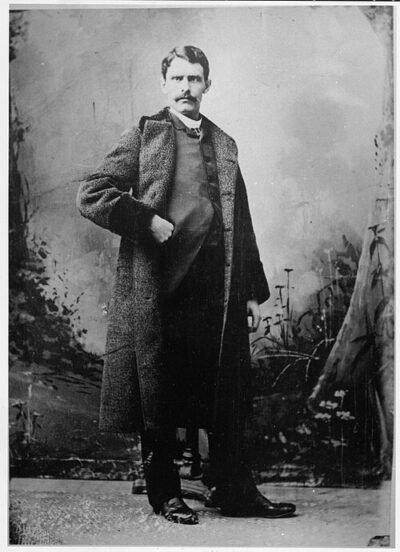
Orville Gibson
Orville Gibson was an American luthier. Born May 1, 1856, in Chateaugay. Died August 21, 1918, in Ogdensburg.
Facts
11 facts · 0 confirmed by two sources · 0 cited · 9 from one source · 2 where the sources disagree
What’s different
- Born: we show May 1, 1856 (Sources disagree). Wikipedia says May 8, 1856
- Died: we show August 21, 1918 (Sources disagree). Wikipedia says August 19, 1918
Where this comes from
Papalocal keeps its own record. It started from these sources; what each one said is kept here as it was copied, so a change on their side never changes this page by itself. Tap one to read its version.
What Wikidata says · copied November 18, 2026 · revision 2565038202
- Described as
- American luthier (1856–1918)
- Born
- May 1, 1856
- Died
- August 21, 1918 · 1 reference
- Born in
- Chateaugay
- Died in
- Ogdensburg
- Cause of death
- endocarditis
- Name at birth
- Orville H. Gibson · 1 reference
- Citizen of
- United States
- Occupation
- guitar maker; musical instrument maker; luthier · 1 reference
- Field
- luthier
- Wikipedias with a page
- 17
Wikidata item Q983557 (wikidata.org/wiki/Q983557), public domain (CC0). Copied November 18, 2026.
What Wikipedia says · copied November 18, 2026 · revision 1385077781
Orville H. Gibson (May 8, 1856 – August 19, 1918) was an American luthier who founded the Gibson Guitar Company in Kalamazoo, Michigan, in 1902, makers of guitars, mandolins and other instruments.
His earliest known instrument was a 10-string mandolin-guitar, which bears the date 1894. Gibson's mandolins were "unlike any previous flatback instrument," according to music historian Paul Sparks. His company's manufacturing standards were very high, and his instruments heavily marketed.
- Born, in its opening lines
- May 8, 1856
- Died, in its opening lines
- August 19, 1918
From the Wikipedia article “Orville Gibson” (en.wikipedia.org/wiki/Orville_Gibson), by its contributors, under CC BY-SA 4.0 (creativecommons.org/licenses/by-sa/4.0/). Copied November 18, 2026; not changed.
Confirmed Two sources agree. Cited One source, and it names where it got it. One source One source, without a reference of its own. Sources disagree The sources disagree. We show the best-supported value and keep theirs below.
