
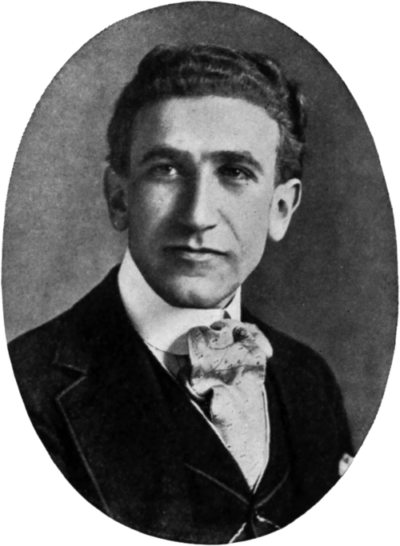
Otto Lederer
Otto Lederer was a Czech-American actor. Born May 17, 1886, in Prague. Died September 3, 1965, in Woodland Hills.
Facts
9 facts · 2 confirmed by two sources · 2 cited · 5 from one source
What’s different
- Born: we show May 17, 1886 (Confirmed). Wikidata also lists April 17, 1886
Where this comes from
Papalocal keeps its own record. It started from these sources; what each one said is kept here as it was copied, so a change on their side never changes this page by itself. Tap one to read its version.
What Wikidata says · copied November 18, 2026 · revision 2567299594
- Described as
- Czech-American actor (1886–1965)
- Born
- April 17, 1886 · 2 references; May 17, 1886 · 1 reference
- Died
- September 3, 1965 · 2 references
- Born in
- Prague · 1 reference
- Died in
- Woodland Hills
- Buried in
- Forest Lawn Memorial Park
- Citizen of
- United States; Austria–Hungary
- Occupation
- actor · 1 reference; film director
- Wikipedias with a page
- 18
Wikidata item Q3357824 (wikidata.org/wiki/Q3357824), public domain (CC0). Copied November 18, 2026.
What Wikipedia says · copied November 18, 2026 · revision 1379963674
Otto Lederer (May 17, 1886 – September 3, 1965) was a Czech-American film actor. He appeared in 120 films between 1912 and 1933, most notably The Jazz Singer, the first full-length film to have sound sequences, and the Laurel and Hardy short You're Darn Tootin'.
Lederer was born in Prague. In 1925, He married Segunda Yriondo. They were divorced on July 10, 1929. Prior he was married to german actress Gretchen Lederer. Both had a son together (1908–1940). Lederer is entombed at Forest Lawn Memorial Park Cemetery.
- Born, in its opening lines
- May 17, 1886
- Died, in its opening lines
- September 3, 1965
From the Wikipedia article “Otto Lederer” (en.wikipedia.org/wiki/Otto_Lederer), by its contributors, under CC BY-SA 4.0 (creativecommons.org/licenses/by-sa/4.0/). Copied November 18, 2026; not changed.
Confirmed Two sources agree. Cited One source, and it names where it got it. One source One source, without a reference of its own. Sources disagree The sources disagree. We show the best-supported value and keep theirs below.
