
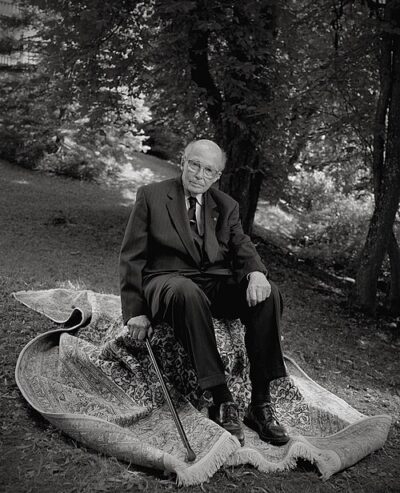
Otto von Habsburg
Otto von Habsburg was a Head of the House of Habsburg and German politician. Born November 20, 1912, in Villa Wartholz. Died July 4, 2011, in Pöcking. Positions held include Member of the European Parliament (1979–1999) and Head of the House of Habsburg (1922–2011). Educated at Benedictine High School of Pannonhalma and Katholieke Universiteit Leuven. Awards include Knight Grand Cross of the Order of St. Gregory the Great, Knight of the Order of the Golden Fleece and Bavarian Order of Merit.
Facts
60 facts · 2 confirmed by two sources · 9 cited · 49 from one source
Where this comes from
Papalocal keeps its own record. It started from these sources; what each one said is kept here as it was copied, so a change on their side never changes this page by itself. Tap one to read its version.
What Wikidata says · copied November 16, 2026 · revision 2565540166
- Described as
- Head of the House of Habsburg and German politician
- Other names
- Crown Prince Otto of Austria, Otto, Crown Prince of Austria
- Born
- November 20, 1912 · 9 references
- Died
- July 4, 2011 · 8 references
- Born in
- Villa Wartholz
- Died in
- Pöcking · 2 references
- Buried in
- Imperial Crypt
- Name at birth
- Franz Joseph Otto Robert Maria Anton Karl Max Heinrich Sixtus Xaver Felix Renatus Ludwig Gaetan Pius Ignatius Habsburg
- Citizen of
- Germany (1990–); Hungary (–1918); Cisleithania (–1918); West Germany (1978–1990)
- Occupation
- politician · 1 reference
- Positions held
- Member of the European Parliament (1979–1999) · 1 reference; Head of the House of Habsburg (1922–2011)
- Political party
- Christian Social Union of Bavaria
- Education
- Benedictine High School of Pannonhalma; Katholieke Universiteit Leuven (1929–1935) · 1 reference
- Member of
- World League for Freedom and Democracy; Paneuropean Union; Mont Pelerin Society; Verein Deutsche Sprache · 1 reference; Academy of the Kingdom of Morocco · 1 reference
- Awards
- Knight Grand Cross of the Order of St. Gregory the Great; Knight of the Order of the Golden Fleece; Bavarian Order of Merit; Order of Saint Hubert; Schlesierschild; Knight Grand Cross of the Order of St. Sylvester; Order of the Three Stars, 3rd Class; Grand Cross of the Order of Merit of Hungary; Order of the Cross of Terra Mariana, 1st Class; Grand Cross of the Legion of Honour; Order of the Gold Lion of the House of Nassau; Commander of the Order of the Lithuanian Grand Duke Gediminas; honorary citizen of Sarajevo; honorary citizenship; Broquette-Gonin prize in literature (2 times) (1963, 1967)
- Spouse
- Regina, Crown Princess of Austria (1951–2010) · 1 reference
- Children
- Archduchess Andrea, Countess of Neipperg · 1 reference; Archduchess Monika, Duchess of Santángelo; Archduchess Michaela of Austria; Archduchess Gabriela of Austria; Archduchess Walburga, Countess Douglas; Karl von Habsburg · 1 reference; Georg von Habsburg
- Father
- Charles I of Austria
- Mother
- Zita of Bourbon-Parma · 1 reference
- Siblings
- Archduchess Adelheid of Austria; Robert, Archduke of Austria-Este; Archduke Felix of Austria · 1 reference; Archduke Carl Ludwig of Austria; Archduke Rudolf of Austria; Duchess Charlotte, Duchess of Mecklenburg-Strelitz; Archduchess Elisabeth of Austria
- Religion
- Catholicism
- Lived in
- Schloss Eckartsau (–1919); Switzerland (1919–1921); Madeira Island (1922–); Belgium (1929–); United States (1940–1944)
- Website
- http://otto.twschwarzer.de
- Wikipedias with a page
- 68
Wikidata item Q76343 (wikidata.org/wiki/Q76343), public domain (CC0). Copied November 16, 2026.
What Wikipedia says · copied November 16, 2026 · revision 1385356328
Otto von Habsburg (20 November 1912 – 4 July 2011) was the last crown prince of Austria-Hungary from 1916 until its dissolution in November 1918. In 1922, he became the pretender to the former thrones, head of the House of Habsburg-Lorraine, and sovereign of the (Austrian) Order of the Golden Fleece, upon the death of his father. He resigned as Sovereign of the Golden Fleece in 2000 and as head of the Imperial House in 2007.
The eldest son of Charles I and IV, the last emperor of Austria and king of Hungary, and his wife, Zita of Bourbon-Parma, Otto was born as Franz Joseph Otto Robert Maria Anton Karl Max Heinrich Sixtus Xaver Felix Renatus Ludwig Gaetan Pius Ignatius von Habsburg, third in line to the thrones, as Archduke Otto of Austria, Royal Prince of Hungary, Bohemia, and Croatia. With his father's accession in 1916, he was likely to become emperor and king. As his father never abdicated, Otto was considered by himself, his family and Austro-Hungarian legitimists to be the rightful emperor-king from his father's death in 1922.
Otto was exiled in 1919 and grew up mostly in Spain. His devout Catholic mother raised him according to the old curriculum of Austria-Hungary, preparing him to become a Catholic monarch. During his life in exile, he lived in Austria, Belgium, France, Madeira (Portugal), Spain, Switzerland, the US, and from 1954 until his death, in Bavaria (Germany), in the residence Villa Austria. He had been stateless de jure and de facto, and possessed passports of the Order of Malta and Spain.
Otto was active on the European political stage from the 1930s, by promoting the cause of Habsburg restoration and as an early proponent of European integration. He was a fierce opponent of Nazism, nationalism, and communism. He has been described as one of the leaders of the Austrian resistance. After the 1938 Anschluss, he was sentenced to death by the Nazis and fled Europe to the US.
Otto was Vice President (1957–73) and President (1973–2004) of the International Paneuropean Union movement. From 1979 to 1999, he served as a Member of the European Parliament for Germany's Christian Social Union of Bavaria (CSU). He took a strong interest in Eastern Bloc countries behind the Iron Curtain, and had an empty chair set up in the European Parliament to symbolize their absence. Otto played a notable role in the revolutions of 1989 as a co-initiator of the Pan-European Picnic. He was a strong supporter of EU membership for Central and Eastern European countries. He published several books on historical and political affairs.
Otto has been described as one of the "architects of the European idea and of European integration" together with Robert Schuman, Konrad Adenauer, and Alcide De Gasperi. His funeral took place at St. Stephen's Cathedral in Vienna on 16 July 2011; he was entombed in the Imperial Crypt in Vienna and his heart buried in Pannonhalma Archabbey in Hungary.
- Born, in its opening lines
- November 20, 1912
- Died, in its opening lines
- July 4, 2011
From the Wikipedia article “Otto von Habsburg” (en.wikipedia.org/wiki/Otto_von_Habsburg), by its contributors, under CC BY-SA 4.0 (creativecommons.org/licenses/by-sa/4.0/). Copied November 16, 2026; not changed.
Confirmed Two sources agree. Cited One source, and it names where it got it. One source One source, without a reference of its own. Sources disagree The sources disagree. We show the best-supported value and keep theirs below.
