
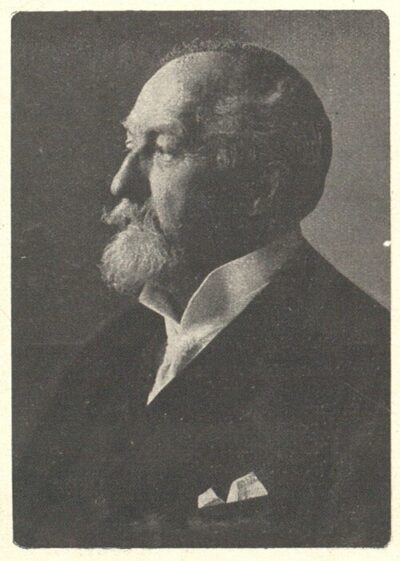
Otto Wagner
Otto Wagner was an Austrian architect. Born July 13, 1841, in Penzing. Died April 11, 1918, in Vienna. Known for Vienna Lines houses by Otto Wagner, Villa Wagner I and Villa Wagner II. Educated at Academy of Fine Arts Vienna and Akademisches Gymnasium. Awards include Order of Franz Joseph, Order of Saint Stanislaus and Order of the Iron Crown (Austria).
Facts
27 facts · 2 confirmed by two sources · 7 cited · 18 from one source
Where this comes from
Papalocal keeps its own record. It started from these sources; what each one said is kept here as it was copied, so a change on their side never changes this page by itself. Tap one to read its version.
What Wikidata says · copied November 16, 2026 · revision 2568963628
- Described as
- Austrian architect (1841-1918)
- Other names
- Otto Koloman Wagner, Otto Colomann Wagner
- Born
- July 13, 1841 · 12 references
- Died
- April 11, 1918 · 7 references
- Born in
- Penzing · 1 reference
- Died in
- Vienna · 2 references
- Buried in
- Otto Wagner's grave
- Cause of death
- 1918–1920 flu pandemic
- Name at birth
- Otto Koloman Wagner
- Citizen of
- Austrian Empire · 3 references; Cisleithania
- Occupation
- architect · 7 references; urban planner · 1 reference; architectural drafter; university teacher · 1 reference; artist · 1 reference
- Worked for
- Academy of Fine Arts Vienna · 1 reference
- Education
- Academy of Fine Arts Vienna; Akademisches Gymnasium
- Known for
- Vienna Lines houses by Otto Wagner; Villa Wagner I; Villa Wagner II; Austrian Postal Savings Bank
- Awards
- Order of Franz Joseph; Order of Saint Stanislaus · 1 reference; Order of the Iron Crown (Austria) · 1 reference; honorary doctor of the Dresden University of Technology
- Children
- Otto Wagner · 1 reference
- Father
- Simeon Wagner · 1 reference
- Wikipedias with a page
- 53
Wikidata item Q84287 (wikidata.org/wiki/Q84287), public domain (CC0). Copied November 16, 2026.
What Wikipedia says · copied November 16, 2026 · revision 1372837620
Otto Koloman Wagner (German: [ˈɔto ˈkoːloman ˈvaːɡnɐ] ; 13 July 1841 – 11 April 1918) was an Austrian architect, furniture designer and urban planner. He was a leading member of the Vienna Secession movement of architecture, founded in 1897, and the broader Art Nouveau movement. Many of his works are found in his native city of Vienna, and illustrate the rapid evolution of architecture during the period. His early works were inspired by classical architecture. By mid-1890s, he had already designed several buildings in what became known as the Vienna Secession style. Beginning in 1898, with his designs of Vienna Metro stations, his style became floral and Art Nouveau, with decoration by Koloman Moser. His later works, 1906 until his death in 1918, had geometric forms and minimal ornament, more clearly expressing their modern structure and materials. Although they are considered predecessors to modern architecture they remain within the larger classical tradition of the Schinkel School in Germany and Central Europe.
- Born, in its opening lines
- July 13, 1841
- Died, in its opening lines
- April 11, 1918
From the Wikipedia article “Otto Wagner” (en.wikipedia.org/wiki/Otto_Wagner), by its contributors, under CC BY-SA 4.0 (creativecommons.org/licenses/by-sa/4.0/). Copied November 16, 2026; not changed.
Confirmed Two sources agree. Cited One source, and it names where it got it. One source One source, without a reference of its own. Sources disagree The sources disagree. We show the best-supported value and keep theirs below.
