
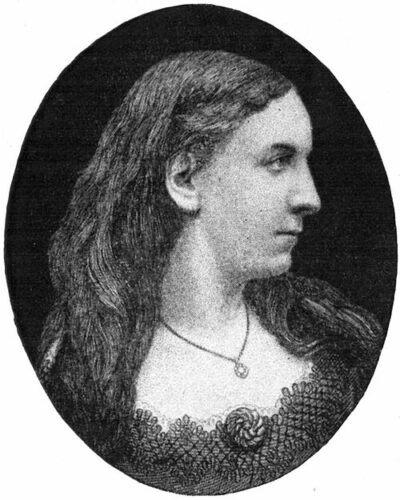
Ouida was a British novelist. Born January 1, 1839, in Bury St Edmunds. Died January 25, 1908, in Viareggio.
Facts
12 facts · 2 confirmed by two sources · 4 cited · 6 from one source
Where this comes from
Papalocal keeps its own record. It started from these sources; what each one said is kept here as it was copied, so a change on their side never changes this page by itself. Tap one to read its version.
What Wikidata says · copied November 16, 2026 · revision 2563296686
- Described as
- British novelist (1839–1908)
- Other names
- Marie Louise de la Ramée, Marie Louise Ramé, Marie Louise de la Ramee, Marie Louise Rame
- Born
- January 1, 1839 · 6 references
- Died
- January 25, 1908 · 6 references
- Born in
- Bury St Edmunds · 1 reference
- Died in
- Viareggio · 1 reference
- Buried in
- Bagni di Lucca
- Cause of death
- pneumonia
- Name at birth
- Marie Louise Ramé
- Citizen of
- United Kingdom of Great Britain and Ireland; United Kingdom · 1 reference
- Occupation
- writer · 4 references; novelist
- Field
- young adult literature
- Wikipedias with a page
- 37
Wikidata item Q258001 (wikidata.org/wiki/Q258001), public domain (CC0). Copied November 16, 2026.
What Wikipedia says · copied November 16, 2026 · revision 1384680510
Maria Louise Ramé (1 January 1839 – 25 January 1908), going by the name Marie Louise de la Ramée and known by the pseudonym Ouida ( WEE-də), was an English novelist. Ouida wrote more than 40 novels, as well as short stories, children's books and essays. Moderately successful, she lived a life of luxury, entertaining many of the literary figures of the day.
Under Two Flags (1867), one of her most famous novels, described the British in Algeria. It expressed sympathy for the French colonists – with whom Ouida deeply identified – and, to some extent, the Arabs. The novel was adapted for the stage, and was filmed six times. Her 1872 novel A Dog of Flanders is considered a children's classic in much of Asia. The American author Jack London cited her novel Signa as one of the reasons for his literary success. Her lavish lifestyle eventually led her to penury, and her works were put up for auction to pay her debts. She died in Italy from pneumonia. Soon after her death, her friends organized a public subscription in Bury St Edmunds, her birthplace, where they had a fountain for horses and dogs installed in her name.
- Born, in its opening lines
- January 1, 1839
- Died, in its opening lines
- January 25, 1908
From the Wikipedia article “Ouida” (en.wikipedia.org/wiki/Ouida), by its contributors, under CC BY-SA 4.0 (creativecommons.org/licenses/by-sa/4.0/). Copied November 16, 2026; not changed.
Confirmed Two sources agree. Cited One source, and it names where it got it. One source One source, without a reference of its own. Sources disagree The sources disagree. We show the best-supported value and keep theirs below.
