
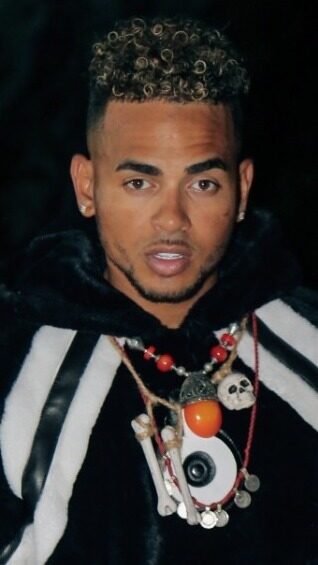
Ozuna
Ozuna is a Puerto Rican singer. Born May 13, 1992, in San Juan. Awards include Latin Grammy Award for Best Urban Fusion/Performance and Latin Grammy Award for Best Urban Song.
Facts
20 facts · 0 confirmed by two sources · 7 cited · 12 from one source · 1 where the sources disagree
What’s different
- Born: we show May 13, 1992 (Sources disagree). Wikipedia says March 13, 1992
Where this comes from
Papalocal keeps its own record. It started from these sources; what each one said is kept here as it was copied, so a change on their side never changes this page by itself. Tap one to read its version.
What Wikidata says · copied November 15, 2026 · revision 2569778993
- Described as
- Puerto Rican singer (born 1992)
- Other names
- Juan Carlos Ozuna Rosado
- Born
- May 13, 1992 · 1 reference
- Born in
- San Juan · 1 reference
- Name at birth
- Juan Carlos Ozuna Rosado · 1 reference
- Citizen of
- United States; Puerto Rico
- Occupation
- singer · 1 reference; rapper; actor; songwriter; musician · 1 reference
- Genre
- reggaeton; Latin trap; Latin pop · 1 reference; dancehall
- Instrument
- voice
- Record label
- Dímelo Vi (2017–); Sony Music Latin (2017–) · 1 reference
- Awards
- Latin Grammy Award for Best Urban Fusion/Performance (2020) · 1 reference; Latin Grammy Award for Best Urban Song (2020) · 1 reference
- Website
- https://ozuna.store
- Wikipedias with a page
- 33
Wikidata item Q28739901 (wikidata.org/wiki/Q28739901), public domain (CC0). Copied November 15, 2026.
What Wikipedia says · copied November 15, 2026 · revision 1385860844
Juan Carlos Ozuna Rosado (Spanish pronunciation: [xwaŋ ˈkaɾlos oˈsuna roˈsaðo]; born March 13, 1992), known professionally as Ozuna, is a Puerto Rican singer. Five of his studio albums have topped the Billboard Top Latin Albums chart, with Aura (2018) reached number seven on the Billboard 200. His musical style is primarily defined as reggaeton and Latin trap, although he has collaborated with several artists from different genres and his music takes influences from a wide variety of genres, including pop, rock, hip hop, R&B, reggae, bachata, dembow, and electronic, amongst others.
Born and raised in San Juan, Puerto Rico, he decided to become a singer at age 12. He was later discovered by Puerto Rican producer Fernando “Damian” Acevedo from Element Music and Damian Music in Santurce La Placita, Puerto Rico, where he made his first recordings. Ozuna has mentioned in interviews that Acevedo also told him to use his last name as his artist name. Drawing influence from the Latin American genres of reggaeton, salsa, and bachata, he made his musical debut in 2012 with the song "Imaginando", which attracted the attention of recording labels and led to collaborations with Daddy Yankee and Anuel AA. He released several singles before signing with Sony Music Latin in 2017, who funded the recording of his debut album Odisea. His second studio album Aura, released on August 24, 2018, debuted at number seven on the US Billboard 200. His 2018 collaboration with DJ Snake, Cardi B, and Selena Gomez on "Taki Taki" was certified quadruple platinum by the RIAA. He released his third studio album, Nibiru on November 29, 2019. His fourth studio album, ENOC, was released in September 2020.
Since the beginning of his career, he has sold around 15 million records, making him one of the best-selling Latin music artists of all time. On 1 February 2019 Ozuna had the most one billion-view videos on YouTube of any artist and he has won two Latin Grammy Awards, five Billboard Music Awards, twelve Billboard Latin Music Awards, four Guinness World Records, among other accolades. In 2019, Time included him on their annual list of the 100 most influential people in the world. He made his acting debut in the film Que León. He appeared in F9, the ninth film in the Fast & Furious franchise.
In 2022, he played the song "Arhbo" for the 2022 FIFA World Cup along with GIMS, which they also performed during the closing ceremony.
- Born, in its opening lines
- March 13, 1992
From the Wikipedia article “Ozuna” (en.wikipedia.org/wiki/Ozuna), by its contributors, under CC BY-SA 4.0 (creativecommons.org/licenses/by-sa/4.0/). Copied November 15, 2026; not changed.
Confirmed Two sources agree. Cited One source, and it names where it got it. One source One source, without a reference of its own. Sources disagree The sources disagree. We show the best-supported value and keep theirs below.
