
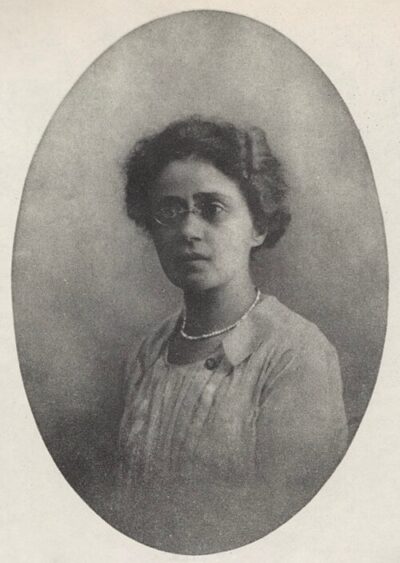
Parashqevi Qiriazi
Parashqevi Qiriazi was an Albanian educational theorist. Born June 2, 1880, in Bitola. Died December 17, 1970, in Tirana. Educated at Robert College.
Facts
14 facts · 1 confirmed by two sources · 3 cited · 9 from one source · 1 where the sources disagree
What’s different
- Born: we show June 2, 1880 (Sources disagree). Wikipedia says May 27, 1886
Where this comes from
Papalocal keeps its own record. It started from these sources; what each one said is kept here as it was copied, so a change on their side never changes this page by itself. Tap one to read its version.
What Wikidata says · copied November 16, 2026 · revision 2569698773
- Described as
- Albanian educational theorist
- Other names
- Paraskevi D. Kirias
- Born
- June 2, 1880
- Died
- December 17, 1970
- Born in
- Bitola · 1 reference
- Died in
- Tirana
- Citizen of
- Albania; Ottoman Empire (–1912) · 1 reference
- Occupation
- linguist; composer; activist · 1 reference; teacher · 1 reference
- Education
- Robert College
- Siblings
- Gjergj Qiriazi; Gjerasim Qiriazi; Sevasti Qiriazi
- Wikipedias with a page
- 31
Wikidata item Q3300364 (wikidata.org/wiki/Q3300364), public domain (CC0). Copied November 16, 2026.
What Wikipedia says · copied November 16, 2026 · revision 1375826887
Parashqevi Qiriazi (Paraskevi D. Kyrias) (27 May 1886 – 17 December 1970) was an Albanian teacher, school director, and publisher who dedicated her life to education in written Albanian. She was a participant at the Congress of Manastir (1908), which decided the characters of the modern Albanian alphabet, and was one of the only female delegates sent to represent her nation at the Paris Peace Conference (1919).
- Born, in its opening lines
- May 27, 1886
- Died, in its opening lines
- December 17, 1970
From the Wikipedia article “Parashqevi Qiriazi” (en.wikipedia.org/wiki/Parashqevi_Qiriazi), by its contributors, under CC BY-SA 4.0 (creativecommons.org/licenses/by-sa/4.0/). Copied November 16, 2026; not changed.
Confirmed Two sources agree. Cited One source, and it names where it got it. One source One source, without a reference of its own. Sources disagree The sources disagree. We show the best-supported value and keep theirs below.
