
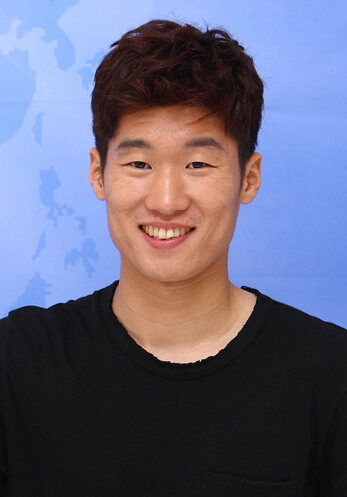
Park Ji-Sung
Park Ji-Sung is a South Korean association football player. Born February 25, 1981, in Seoul. Teams include Manchester United F.C. (2005–2012), Queens Park Rangers F.C. (2012–2014) and PSV Eindhoven (2 times) (2003–2014). Educated at Osaka University of Economics and Law and Myongji University.
Facts
16 facts · 0 confirmed by two sources · 3 cited · 12 from one source · 1 where the sources disagree
What’s different
- Born: we show February 25, 1981 (Sources disagree). Wikipedia says March 30, 1981
Where this comes from
Papalocal keeps its own record. It started from these sources; what each one said is kept here as it was copied, so a change on their side never changes this page by itself. Tap one to read its version.
What Wikidata says · copied November 16, 2026 · revision 2567907456
- Described as
- South Korean association football player
- Other names
- Ji-Sung Park, Park Jisung, Jisung Park, Bak Ji-seong
- Born
- February 25, 1981 · 3 references
- Born in
- Seoul · 1 reference
- Citizen of
- South Korea
- Occupation
- association football player · 1 reference
- Education
- Osaka University of Economics and Law; Myongji University · 1 reference
- Teams
- Manchester United F.C. (2005–2012); Queens Park Rangers F.C. (2012–2014); PSV Eindhoven (2 times) (2003–2014); Kyoto Sanga FC (2000–2003); South Korea national under-20 football team (2000); South Korea national under-23 football team (1999–2004); South Korea men's national football team (2000–2011)
- Sport
- association football
- Spouse
- Kim Min-ji · 1 reference
- Height
- 1.73 m (5 ft 8 in)
- Wikipedias with a page
- 68
Wikidata item Q50603 (wikidata.org/wiki/Q50603), public domain (CC0). Copied November 16, 2026.
What Wikipedia says · copied November 16, 2026 · revision 1384893943
Park Ji-sung (Korean: 박지성; pronounced [pak̚.t͈ɕi.sʌŋ]; born 30 March 1981) is a South Korean former professional footballer who played as a midfielder. Born in the South Korean capital of Seoul, Park is regarded as one of the greatest and most successful Asian players in football history, having won 19 trophies in his career. He is the first Asian footballer to win the UEFA Champions League, play in a UEFA Champions League final, and win the FIFA Club World Cup. Park was able to play anywhere across the midfield and was noted for his exceptional fitness level, discipline, work ethic and off-the-ball movement. His remarkable endurance levels earned him the nickname "Three-Lung" Park.
Park began his football career in his native South Korea and played for the Myongji University team before moving to Japan to play for Kyoto Purple Sanga. Park then followed his national team manager Guus Hiddink to the Netherlands to play for PSV Eindhoven. He won two Eredivisie titles, a KNVB Cup, and a Johan Cruyff Shield in Eindhoven before his talents were recognised by Manchester United manager Sir Alex Ferguson as PSV reached the semi-finals of the 2004–05 UEFA Champions League. Park signed for Manchester United for a fee of around £4 million in July 2005, and in his time at United won 11 trophies, including four Premier League titles, the UEFA Champions League and the FIFA Club World Cup. He moved to Queens Park Rangers in 2012 after seven years with Manchester United. However, an injury-interrupted season with QPR, combined with the club's relegation, led to Park rejoining PSV on loan for the 2013–14 season, following which he retired due to a knee injury.
As a member of the South Korea national team, Park won 100 caps and scored 13 goals. He was a member of the team that finished fourth at the 2002 FIFA World Cup, and also represented his nation at the 2006 FIFA World Cup and the 2010 FIFA World Cup. At the World Cup, he was named man of the match four times, the most of any Asian player, and is currently South Korea's joint all-time leading World Cup goalscorer with three goals alongside Ahn Jung-hwan and Son Heung-min, having scored in three consecutive tournaments.
- Born, in its opening lines
- March 30, 1981
From the Wikipedia article “Park Ji-sung” (en.wikipedia.org/wiki/Park_Ji-sung), by its contributors, under CC BY-SA 4.0 (creativecommons.org/licenses/by-sa/4.0/). Copied November 16, 2026; not changed.
Confirmed Two sources agree. Cited One source, and it names where it got it. One source One source, without a reference of its own. Sources disagree The sources disagree. We show the best-supported value and keep theirs below.
