
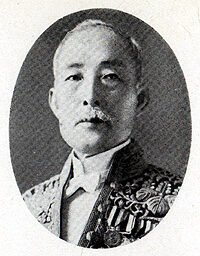
Park Jung-yang
Park Jung-yang was a Korean Joseon dynasty and Japanese-ruled Korean bureaucrat, politician, liberalism and social activists. Born May 3, 1872, in Yangju. Died April 23, 1959, in Daegu. Positions held include member of the House of Peers. Educated at Aoyama Gakuin. Awards include Order of the Sacred Treasure, 1st Class.
Facts
13 facts · 2 confirmed by two sources · 0 cited · 11 from one source
Where this comes from
Papalocal keeps its own record. It started from these sources; what each one said is kept here as it was copied, so a change on their side never changes this page by itself. Tap one to read its version.
What Wikidata says · copied November 16, 2026 · revision 2565741921
- Described as
- Korean Joseon dynasty and Japanese-ruled Korean bureaucrat, politician, liberalism and social activists (1872-1959)
- Other names
- Won-geun, Haeak, Ilso
- Born
- May 3, 1872
- Died
- April 23, 1959
- Born in
- Yangju
- Died in
- Daegu
- Cause of death
- disease
- Citizen of
- South Korea
- Occupation
- politician; philosopher; autobiographer
- Positions held
- member of the House of Peers
- Education
- Aoyama Gakuin
- Awards
- Order of the Sacred Treasure, 1st Class
- Religion
- Confucianism
- Wikipedias with a page
- 47
Wikidata item Q495510 (wikidata.org/wiki/Q495510), public domain (CC0). Copied November 16, 2026.
What Wikipedia says · copied November 16, 2026 · revision 1373543791
Pak Chungyang (Korean: 박중양; Hanja: 朴重陽; May 3, 1872 – April 23, 1959) was a Korean bureaucrat and politician in the Japanese colonial government. His art names were Haeak (해악) and Ilso (일소), and his courtesy name was Wongeun (원근). He also had the Japanese names Shigeyō Hōchū (朴忠重陽), Jūyō Boku (朴 重陽) and Shin Yamamoto (山本 信). Pak was Governor of the prefecture Kōkai Prefecture from 1921 to 1923 and in 1928. He was also governor of Chūseihoku Prefecture from 1923 to 1925.
Pak went abroad to Japan to study and later returned to become a bureaucrat in his country. He was appointed as the Mayor of Daegu and the deputy Governor of North Gyeongsang Province from 1906 to 1907. Later, he succeeded sequentially in the positions of Governor of Phyeongannamto, South Jeolla Province, North Gyeongsang Province, Phyeonganpukto and South Chungcheong Province. Pak was involved in the Japan–Korea Treaty of 1910 and opposed the March First Movement. He also founded the Refrain Club.
He demolished the castle of Daegueup and the Old Gyungsangdo Provincial Office, and contributed to city planning and road maintenance in Daegu. He also participated in the destruction of the Castle of Jinju. He was a conscientious Japanese colonial supporter with pro-Japanese group ideology as well as an advocate for civil rights.
Pak was pro-Japanese, and was later named a collaborator ("chinilpa") after World War II.
- Born, in its opening lines
- May 3, 1872
- Died, in its opening lines
- April 23, 1959
From the Wikipedia article “Pak Chungyang” (en.wikipedia.org/wiki/Pak_Chungyang), by its contributors, under CC BY-SA 4.0 (creativecommons.org/licenses/by-sa/4.0/). Copied November 16, 2026; not changed.
Confirmed Two sources agree. Cited One source, and it names where it got it. One source One source, without a reference of its own. Sources disagree The sources disagree. We show the best-supported value and keep theirs below.
